
Tokyo in the 1990s: A Walk Through Asakusa and Tokyo Tower
A look back at Tokyo during the spring of 1992, exploring how Asakusa, Tokyo Tower, and spring travel have shifted over the decades.
Stepping Back into 1990s Tokyo: Historic Sites, Cooler Springs, and Quiet Corners
TL;DR: A personal look into Tokyo in April 1992 reveals how landmark destinations like Asakusa and Tokyo Tower operated before the era of smartphones and heavy mass tourism. From cooler spring temperatures and predictable cherry blossom seasons to the refurbishment cycles of Senso-ji, visiting Tokyo offers a deeper appreciation when viewed through its historical layers.
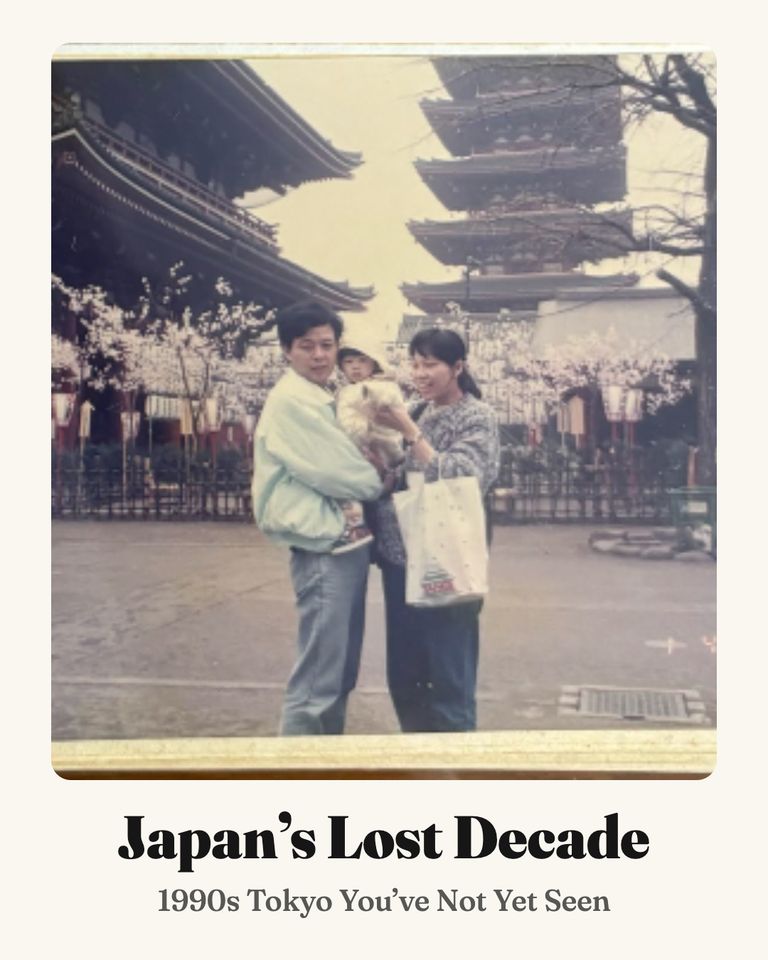
Traveling through Tokyo today means navigating a city defined by seamless digital mapping, dense crowds of international visitors, and an ever-changing skyline. Yet, looking back at historical visits gives travelers a grounding perspective on how much the city has evolved while keeping its historic core intact. In April 1992, our family traveled through Tokyo just as the economic bubble era began to unravel, marking the start of Japan's Lost Decade. Looking back at old family photographs from that visit provides practical insight into how seasonal timing, local transit hubs, and classic sightseeing spots have changed over the years.
Arriving Through New Tokyo International Airport
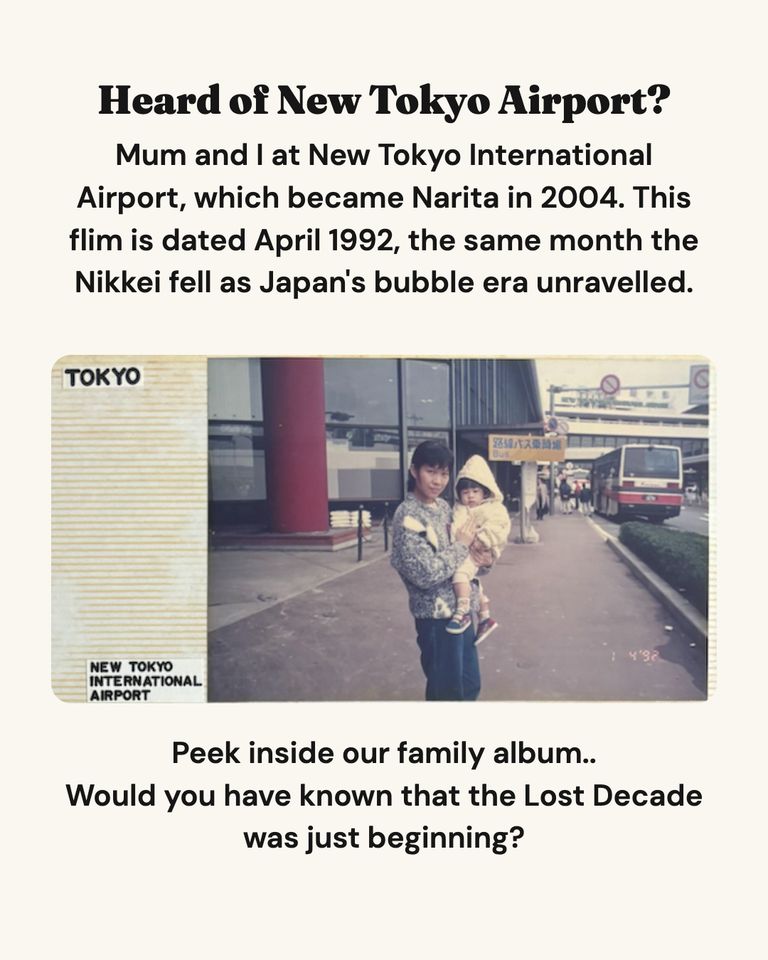
For modern travelers flying into the capital, Narita International Airport is familiar as one of the primary gateways into the Kanto region. However, anyone who visited before 2004 landed at an airport with a different official designation. In April 1992, the gateway was known as New Tokyo International Airport. It would not take on the official name of Narita until 2004.
Arriving in Japan during that period meant stepping into a country undergoing significant macroeconomic transformation. April 1992 was the exact month the Nikkei index fell significantly as the economic bubble unraveled. For international visitors, the financial reality was completely different from current exchange rates. The Japanese yen was significantly stronger against the United States dollar back then, making a trip to Japan an entirely different budgeting experience compared to the favorable currency conditions travelers often encounter today.
Even with those economic shifts, the mechanics of transit upon landing remained a primary consideration for families. Moving through terminal bus stops and navigating onward connections with a young child required careful planning, especially in an era that lacked digital updates on arrivals and departures.
Senso-ji and the Quiet Side of Asakusa
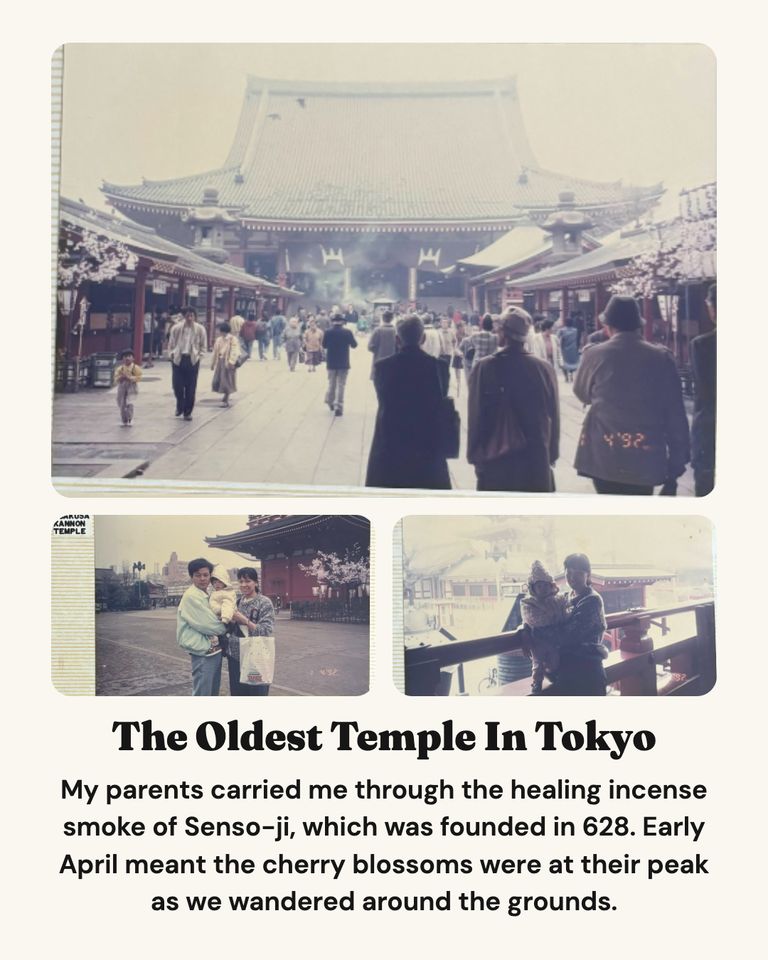
Senso-ji stands as Tokyo's oldest temple, founded in the year 628. Situated in the heart of Asakusa, it remains one of the most visited cultural landmarks in the city. When planning a visit today, travelers often expect heavy foot traffic along the approach, but experiencing the grounds in the early 1990s had a noticeably distinct atmosphere.
In April 1992, before the rise of the internet and widespread mass tourism, the temple grounds and surrounding paths felt far more quiet. Visitors gathered naturally around the large incense burner, pulling the smoke toward themselves in the traditional belief in its healing properties. The open courtyards allowed travelers to walk at a relaxed pace, taking in the main hall and the five-story pagoda without having to maneuver through continuous dense crowds.
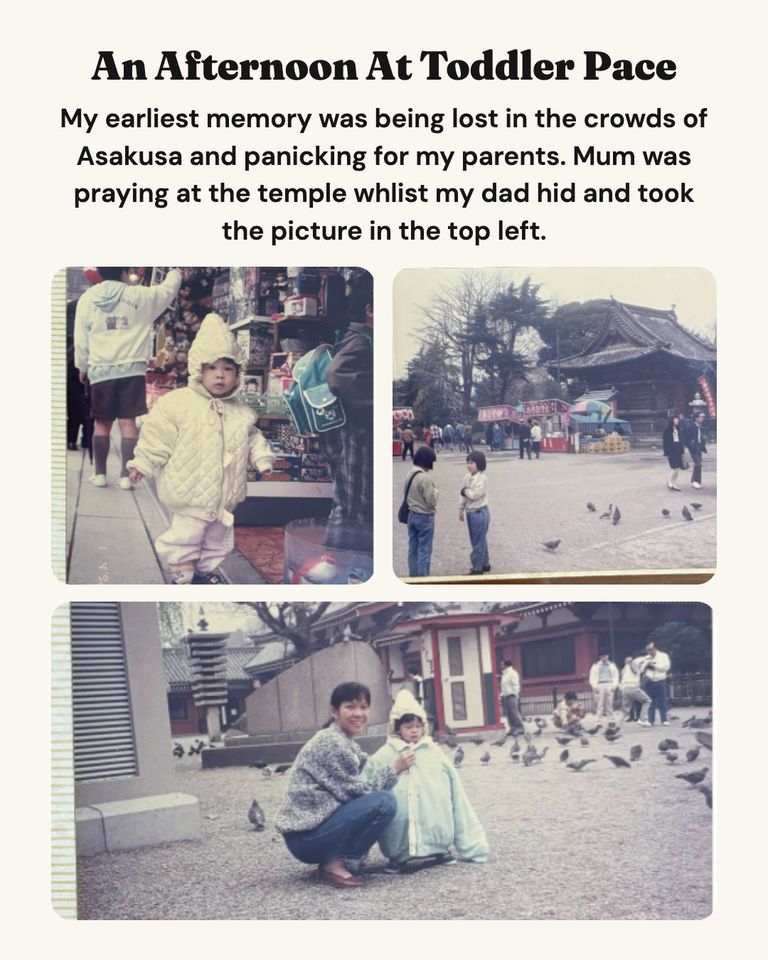
For families traveling with young children, open historic sites like Senso-ji provide space to take a break from the fast pace of urban transit. Courtyards around the temple featured flocks of pigeons, giving toddlers a place to wander and rest between temple visits. At the same time, traveling without modern mobile phones meant staying attentive. One of my earliest childhood memories is the momentary panic of being separated in the Asakusa crowds while my mother was praying at the temple and my father stepped aside to take a photograph. Even in quieter eras, keeping a close eye on family members in major public spaces has always been an essential rule for smooth travel.
The Nakamise Approach and Kaminarimon Restoration
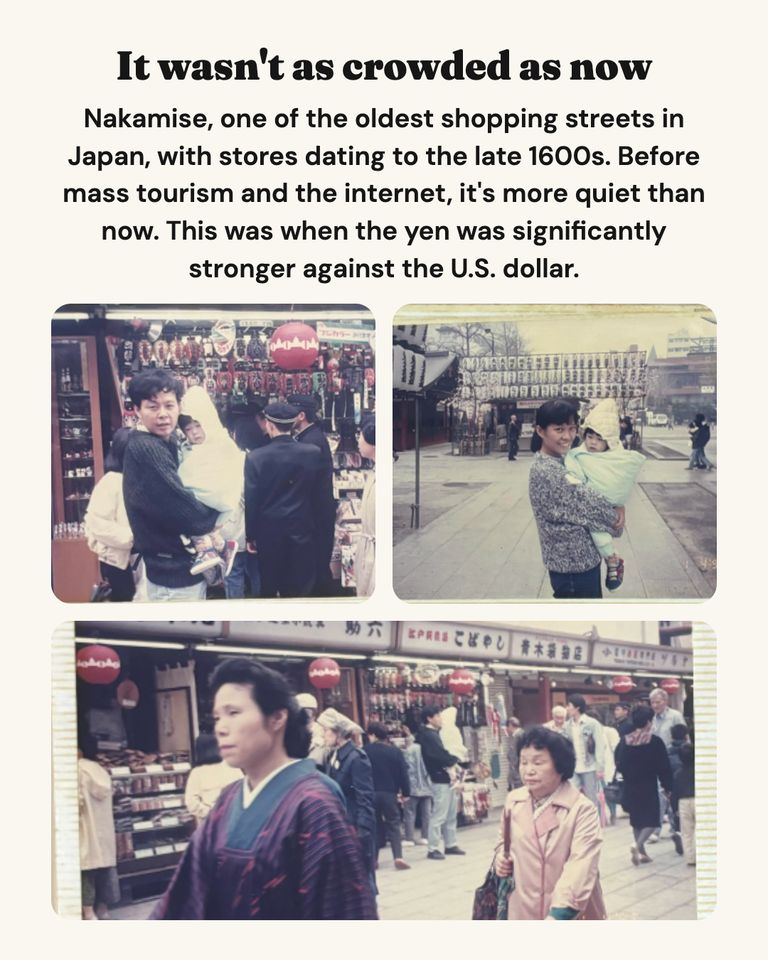
Before reaching the main hall of Senso-ji, travelers pass through the famous Kaminarimon gate and walk the length of Nakamise. Nakamise is one of the oldest shopping streets in Japan, with merchant stores tracing their history back to the late 1600s.
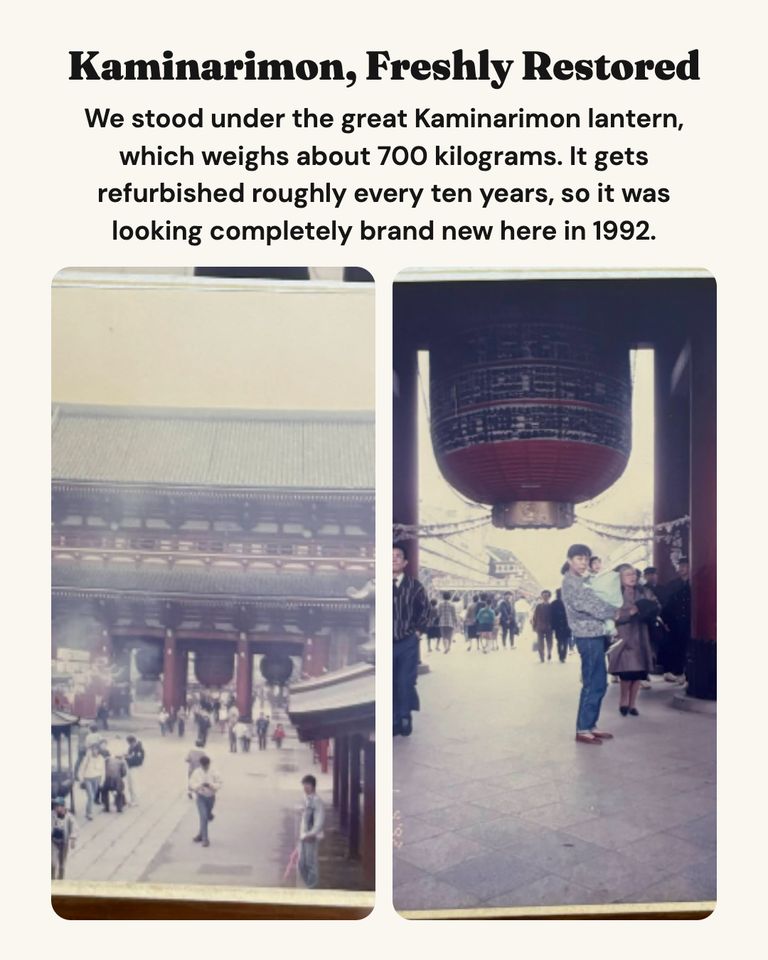
When passing under Kaminarimon, the focal point is the massive red paper lantern hanging in the center of the gate. This iconic feature weighs approximately 700 kilograms. It undergoes a comprehensive refurbishment roughly once every ten years to maintain its structural integrity and bold color against the elements. When our family stood beneath it in April 1992, the lantern was freshly restored and looked completely brand new. Paying attention to these decennial restoration cycles adds an interesting historical detail for visitors who admire the craftsmanship of traditional Japanese paper and wood structures.
Walking down Nakamise in the early 1990s gave a glimpse into a shopping street that catered closely to domestic visitors and local worshippers. Souvenir stalls displayed traditional goods, local snacks, and small toys without the digital signs or cashless payment terminals found today. For anyone visiting Asakusa now, walking Nakamise early in the morning remains the best way to capture a sliver of that quiet, historic streetscape before the daily wave of retail foot traffic begins.
Changing Sakura Seasons and Spring Weather
Spring is arguably the most popular time to visit Tokyo, largely driven by the annual blooming of cherry blossoms. However, looking at the climate records and travel logs from April 1992 shows that spring travel required different preparations compared to present-day trips.
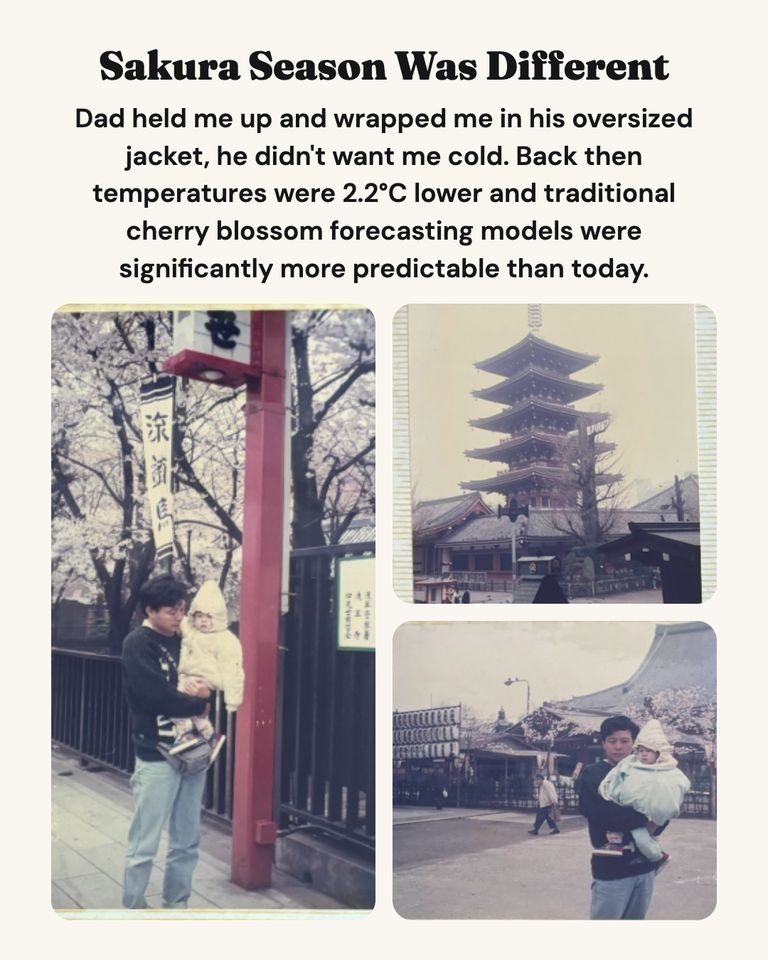
During that trip in early April 1992, the cherry blossoms were at their peak around the grounds of Senso-ji. At that time, spring temperatures in Tokyo were about 2.2 degrees Celsius cooler than they are today. Because of the cooler baseline climate, early April reliably aligned with peak sakura viewing in the city center. Additionally, traditional cherry blossom forecasting models were significantly more predictable back then, allowing travelers to schedule trips around peak bloom dates with greater confidence.
The lower temperatures also meant that visitors had to pack heavier clothing. Family photos show heavy sweaters and oversized jackets wrapped tightly around toddlers to keep the chill away. For contemporary travelers planning a spring itinerary, changing weather trends mean peak blossom dates can arrive earlier than they used to, and spring packing requires versatile layers that account for both warm afternoons and sudden chilly breezes.
Navigating by Hand-Drawn Guideboards
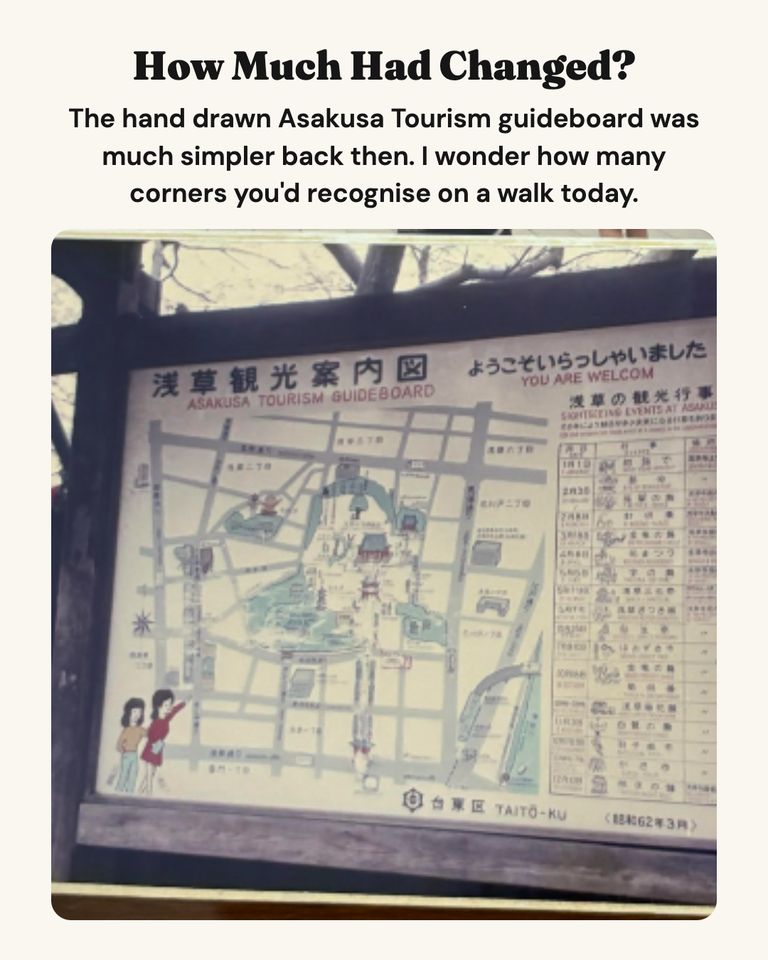
Without smartphones, digital transit cards, or portable translation tools, exploring Tokyo neighborhoods in the 1990s relied on physical signage and neighborhood maps. In Asakusa, visitors regularly stopped before the large, hand-drawn tourism guideboard erected by Taito Ward.
These wooden-framed boards featured simplified, illustrated overviews of the area, labeling the streets leading from Kaminarimon toward the temple complex and nearby riverbanks. A section titled Sightseeing Events at Asakusa listed key cultural festivals and traditional events across the calendar year, month by month, alongside a welcoming greeting for arriving guests.
Using physical guideboards encouraged travelers to observe local landmarks, cross-streets, and temple gates more directly. When exploring Asakusa today, taking a moment to look for remaining public map boards offers an enjoyable way to understand how the neighborhood was laid out and navigated by pedestrians decades ago.
Tokyo Tower in the Era Before Tokyo Skytree
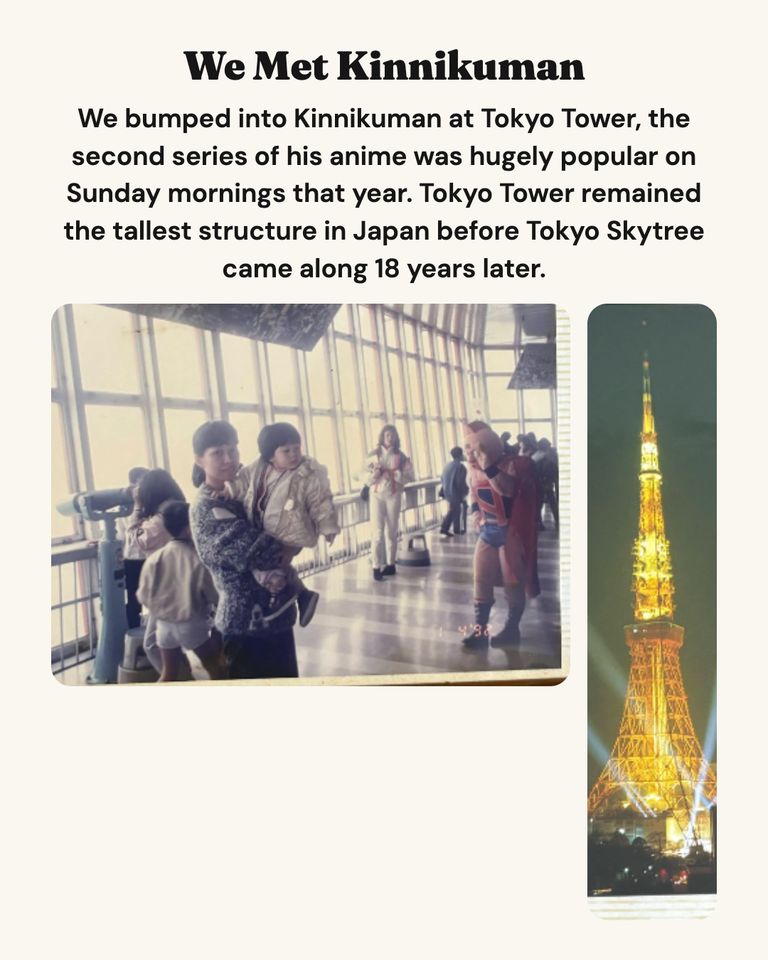
Beyond the historic atmosphere of Asakusa, our 1992 journey took us to Tokyo Tower. Completed in 1958, the red and white tower was long the undisputed focal point of the Tokyo skyline. When we visited the observation deck in April 1992, Tokyo Tower remained the tallest structure in Japan, holding that distinction for another 18 years until Tokyo Skytree was completed.
Visiting Tokyo Tower during that era offered a distinct window into Japanese popular culture. On that afternoon, we encountered Kinnikuman inside the tower observation area. The second anime series of Kinnikuman was hugely popular on Sunday mornings that year, making the character an exciting presence for families and children visiting the observation deck. Observation floors at Tokyo Tower provided classic viewing scopes and wide vistas of the Tokyo metropolis, long before modern digital observation decks and interactive light shows were introduced.
Tokyo Tower continues to be a central stop for travelers, offering a classic mid-century perspective on the city. Visiting both Tokyo Tower and Tokyo Skytree allows travelers to contrast the engineering and urban scale of mid-twentieth-century Tokyo with modern architectural developments.
Perspective on Planning a Tokyo Trip Today
Reflecting on Tokyo in April 1992 highlights how certain aspects of travel remain constant while others evolve. Historic landmarks like Senso-ji and Nakamise retain their centuries-old roots, continuing traditions that predate modern tourism by hundreds of years. The 700-kilogram Kaminarimon lantern continues its regular cycle of restoration, preserving traditional artisan methods for every new generation of visitors.
At the same time, practical planning has changed. Shifting temperatures require modern spring travelers to monitor cherry blossom forecasts more dynamically than in the past, when cooler seasons kept bloom dates consistent in early April. Transit and navigation have evolved from static airport designations and hand-drawn neighborhood boards to streamlined digital connections. Taking the time to understand Tokyo through its historical layers, from the start of the Lost Decade to the present day, enriches any journey through its streets.