
The Truth About Viral J-Beauty: What Locals Actually Buy in Japan
Cut through social media hype with this practical guide to Japanese drugstore skincare, including essential packaging labels and laboratory-tested classics.
Japanese Drugstore Skincare: The Labels and Classics That Locals Actually Rebuy
TL;DR: Social media trends often promote Japanese skincare based on paid influencer marketing rather than formula performance. True staples rely on six clear packaging labels, especially quasi-drug certification, fragrance-free formulations, and alcohol-free bases. Proven products from brands like Canmake, Hada Labo, Curél, SANA, and Melano CC offer reliable results backed by decades of laboratory research.
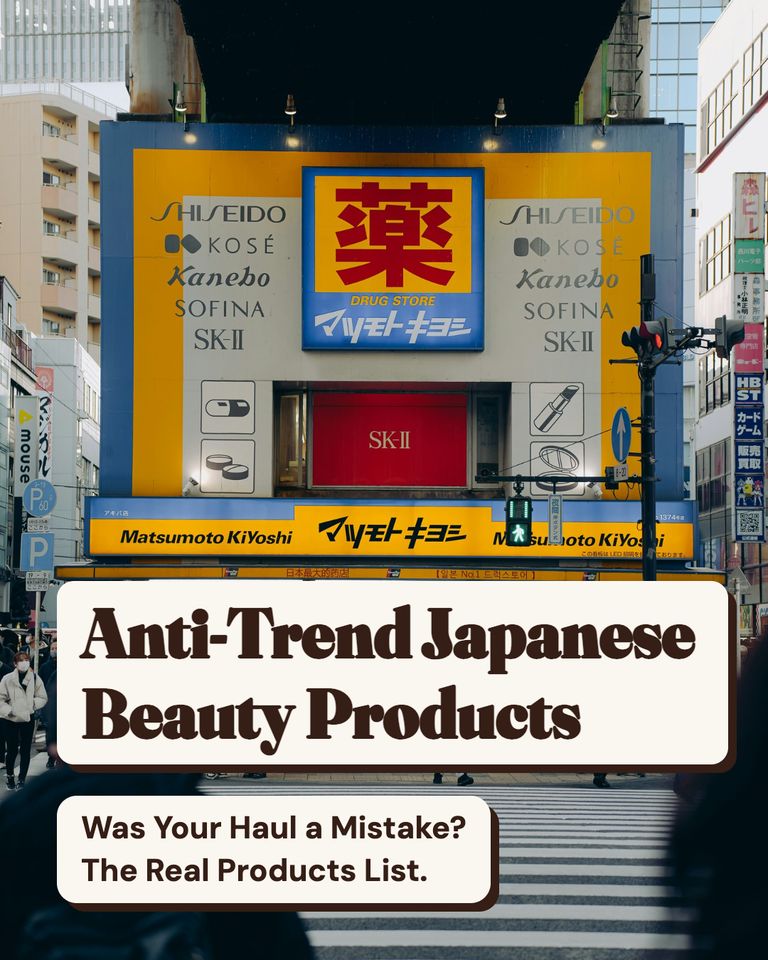
Stepping into a massive Japanese drugstore like Matsumoto Kiyoshi for the first time can easily overwhelm anyone planning a trip. Bright floor-to-ceiling displays, promotional shelf banners, and foreign packaging make it tempting to grab whatever items went viral on your social media feeds before leaving home. After spending significant time wandering aisles in Tokyo, I learned that tourist shopping baskets look completely different from what domestic shoppers pick up. Many viral items gain traction through paid promotional placements rather than quiet, long-term efficacy.
Locals in Japan consistently rebuy formulations that work reliably without irritating the skin. Instead of following marketing budgets, smart shopping in Japanese pharmacies comes down to understanding laboratory labels and sticking with time-tested formulas. Once you know which specific Japanese characters to look for on the box, finding gentle, effective products becomes simple and stress-free.
The Six Japanese Packaging Labels You Need to Know
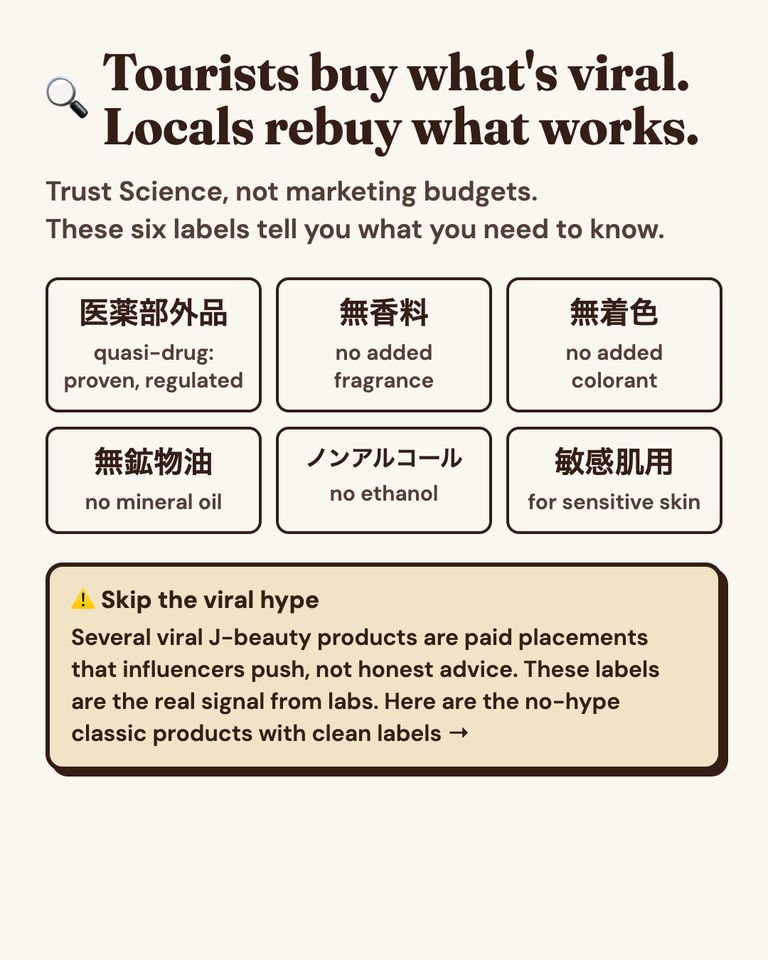
The fastest way to separate marketing fluff from scientific formulation is to read the packaging signals. Japanese cosmetic regulations are strict, meaning that specific claims can only appear when formulas meet defined testing standards. When browsing drugstore aisles, keep an eye out for these six common designations.
First is 医薬部外品 (Iyakubugaihin), translated as quasi-drug. In Japan, this is an official regulatory category that sits between regular cosmetics and pharmaceuticals. A quasi-drug contains proven active ingredients in regulated concentrations, allowing the manufacturer to make specific, legally recognized prevention claims. When a tube bears this mark, you know its key benefits are backed by government-supervised testing.
Second is 無香料 (Mukouryou), which indicates no added fragrance. Unnecessary scents are among the most frequent causes of contact irritation, especially when traveling across different climates.
Third is 無着色 (Muchakushoku), meaning no added colorant. Like fragrance, artificial dyes serve an aesthetic purpose rather than a skincare function.
Fourth is 無鉱物油 (Mukoubutsuyu), which translates to no mineral oil. This is particularly helpful for travelers who prefer lighter emollients or whose skin reacts poorly to heavier petroleum-derived barriers.
Fifth is ノンアルコール (Non-Arukooru), indicating no ethanol. Drying alcohols are frequently added to skincare to create a fast-evaporating, weightless finish, but they can quickly compromise dry or reactive skin barriers.
Sixth is 敏感肌用 (Binkanhada-you), meaning formulated for sensitive skin. Products sporting this label have been designed from the base up to minimize reactivity, skipping aggressive penetration enhancers and common irritants.
Daily Sun Protection Without Drying Alcohol
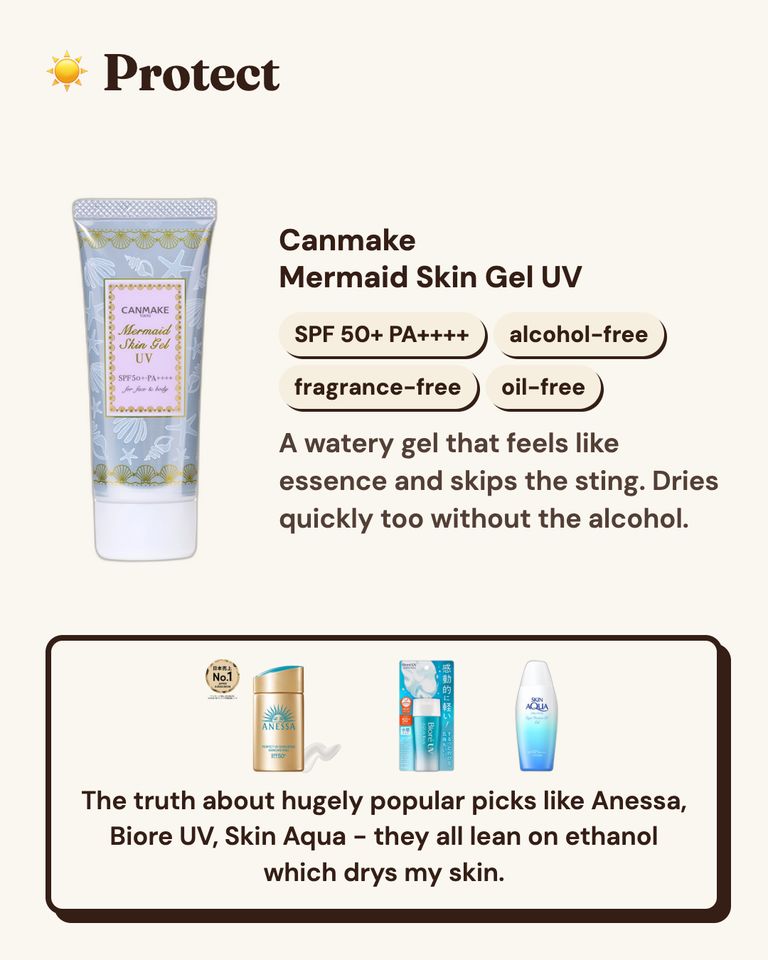
Sunscreen is often the first item international visitors search for in Japan, but popular choices can come with hidden downsides. Hugely popular tourist favorites like Anessa, Biore UV, and Skin Aqua all lean heavily on ethanol to achieve their watery, ultra-light textures. For my own skin, that heavy alcohol content leads directly to dryness and irritation over repeated daily applications.
A far better everyday choice is Canmake Mermaid Skin Gel UV. It provides maximum domestic sun defense at SPF 50+ PA++++ while remaining alcohol-free, fragrance-free, and oil-free. The texture is a watery gel that applies like a light hydrating essence and skips the stinging sensation typical of ethanol-heavy sunscreens. It dries down comfortably and quickly on the face without needing alcohol to speed up evaporation.
Single-Step Cleansing for Minimalist Routines
After long days of exploring city streets, an elaborate multi-step cleansing ritual is often the last thing you want to tackle. Streamlining your evening routine helps preserve your skin barrier while saving precious travel time.
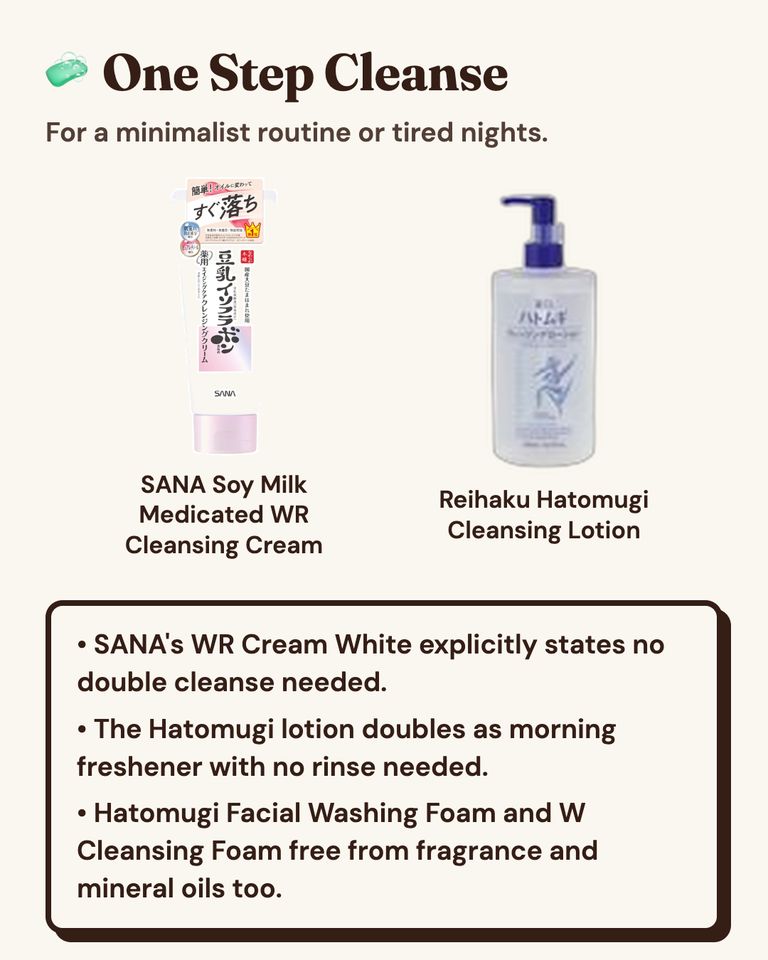
SANA Soy Milk Medicated WR Cleansing Cream is designed specifically for tired nights and minimalist regimens. The packaging for SANA WR Cream White explicitly states that no double cleanse is needed, lifting away daily makeup and buildup without requiring a secondary wash afterward.
For morning routines or ultra-gentle cleansing, Reihaku Hatomugi Cleansing Lotion is another practical option. It cleanses efficiently and doubles as a refreshing morning skin conditioner with no water rinse needed. If you prefer wash-off cleansers, the standard Hatomugi Facial Washing Foam and W Cleansing Foam formulas are also completely free from added fragrance and mineral oils.
Watery Hydration Layers
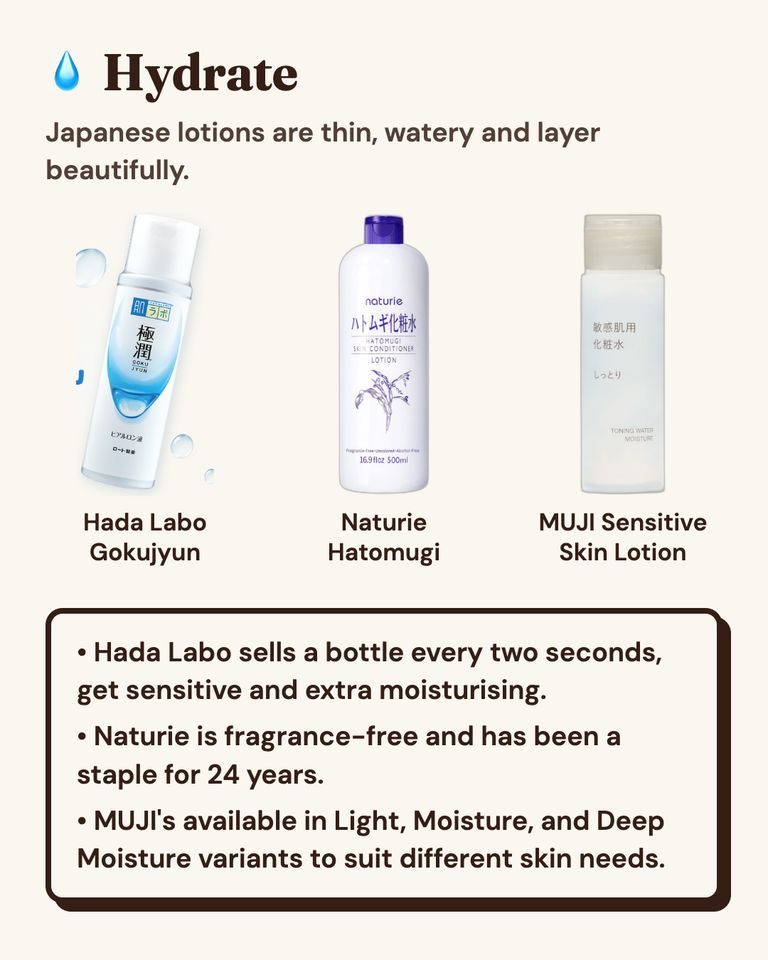
Japanese lotions, often referred to as skin conditioners, are distinct from Western moisturizers. They are thin, watery liquids designed to sink immediately into clean skin, making them ideal for building multiple light layers of hydration.
Hada Labo Gokujyun lotion is famous across the country for good reason, with the brand selling a bottle every two seconds. When shopping the Gokujyun range, look for the sensitive and extra moisturizing versions to provide deep hydration without unnecessary additives.
Naturie Hatomugi Skin Conditioner is another enduring classic that has served as a domestic staple for 24 years. It is completely fragrance-free and comes in generous bottles that can be layered liberally on both the face and body.
For a completely straightforward, no-nonsense option, MUJI Sensitive Skin Lotion offers clean hydration built for reactive skin. It is available in Light, Moisture, and Deep Moisture variants, letting you match the exact moisture weight to your skin type or the season of your trip.
Repairing and Sealing the Skin Barrier
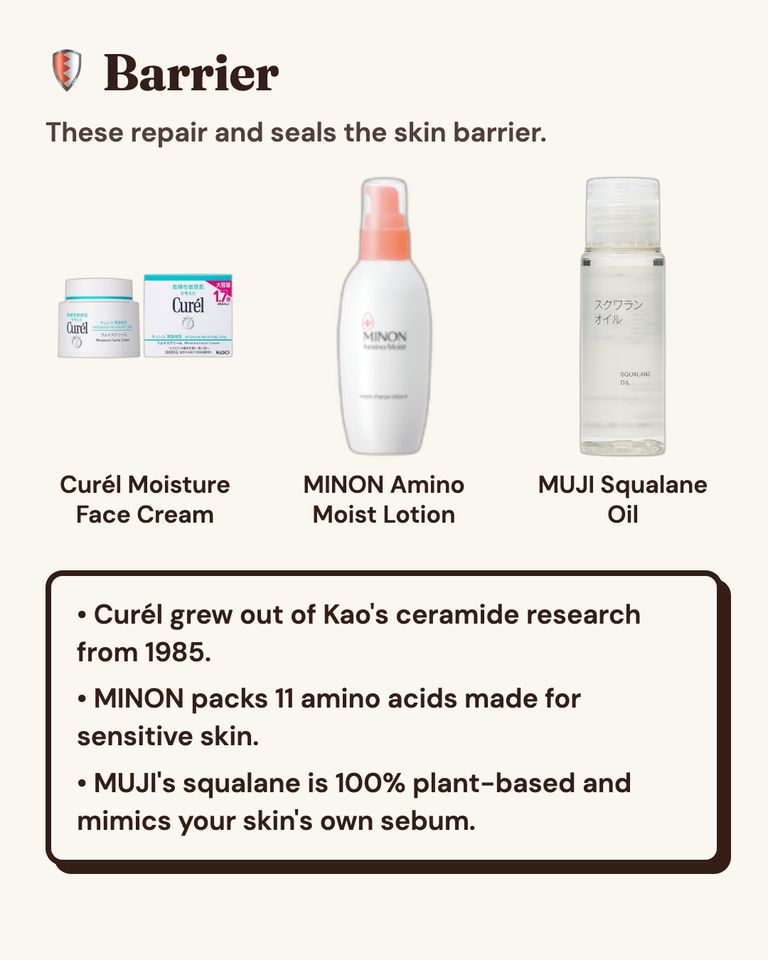
Once watery hydration is pressed into the skin, you need stable barrier products to seal everything in place and prevent moisture loss.
Curél Moisture Face Cream is an exceptional barrier moisturizer that grew directly out of Kao's specialized ceramide research beginning in 1985. Its focus on ceramide functionality makes it a reliable staple for anyone struggling with redness, winter winds, or a compromised barrier.
MINON Amino Moist Lotion approaches barrier maintenance from a different angle, packing 11 amino acids specifically balanced for delicate and sensitive skin. It helps fortify the surface layers without heavy or suffocating textures.
If you prefer pure facial oils to lock in hydration, MUJI Squalane Oil is 100% plant-based. Because squalane naturally mimics your skin's own sebum, it integrates smoothly into your lipid layer without leaving an uncomfortable greasy film.
Traditional Quasi-Drugs and Multi-Purpose Ointments
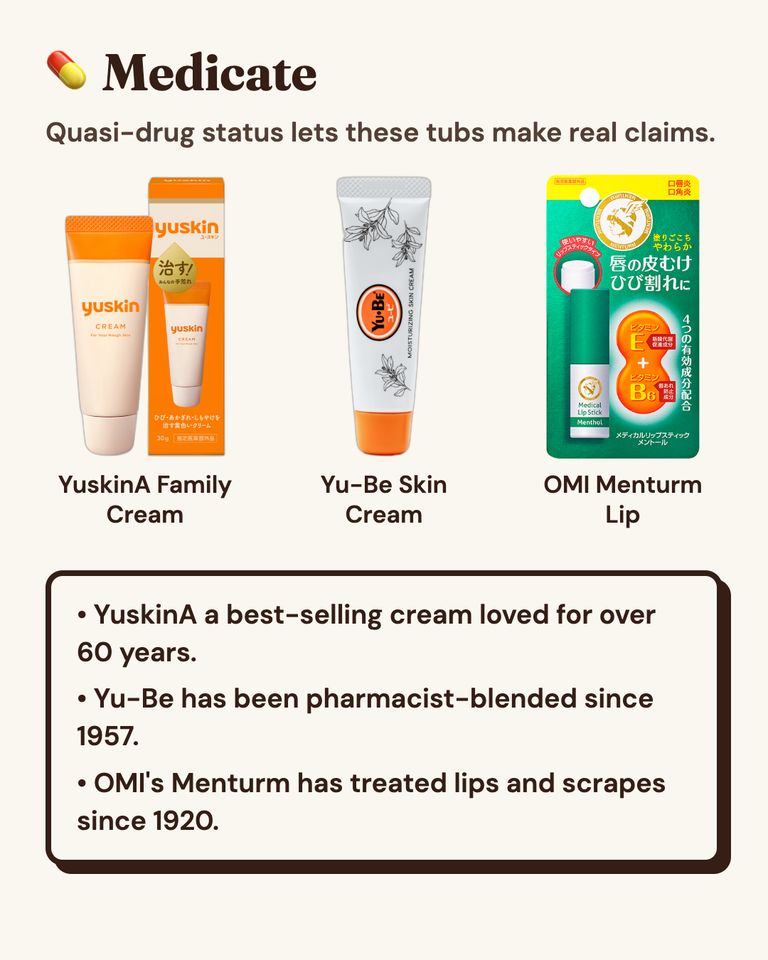
Some of the most dependable products in Japanese pharmacies look remarkably humble. These functional creams have held quasi-drug status for decades, allowing them to make verified restorative claims rather than relying on modern social media trends.
YuskinA Family Cream is a yellow, nourishing cream that has been a domestic best-seller loved for over 60 years. It is a workhorse formula for dry, cracked skin on hands, heels, and elbows.
Yu-Be Skin Cream shares a similar philosophy, having been blended by pharmacists since 1957. Its concentrated, glycerine-rich base provides intense moisture for stubborn dry patches and rough texture.
For lips and minor irritations, OMI Menturm Lip stick has treated dry lips and scrapes since 1920. Keeping one of these small, medicated sticks in your day bag provides immediate relief against dry airplane cabin air and brisk outdoor breezes.
Approved Retinoids for Evening Renewal
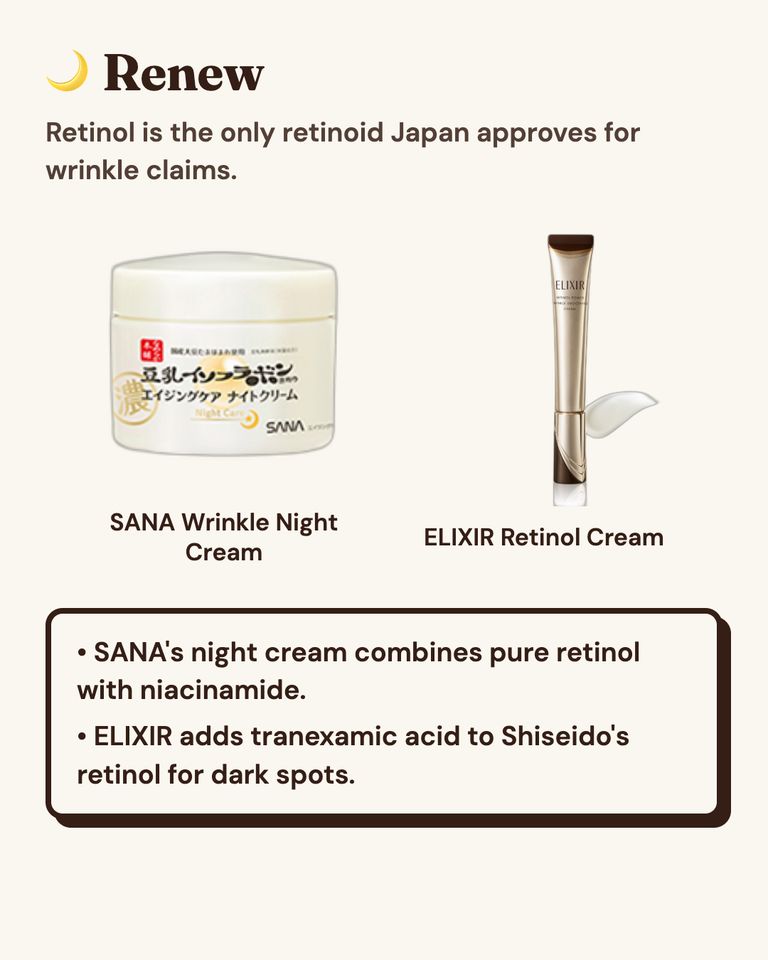
When it comes to addressing fine lines, Japanese regulatory standards are particularly clear. Retinol is the only retinoid that Japanese authorities officially approve for explicit wrinkle-improving claims.
SANA Wrinkle Night Cream is an accessible drugstore favorite that combines pure retinol with niacinamide, supporting cell turnover and skin elasticity in a single overnight formula.
For targeted brightening alongside wrinkle care, ELIXIR Retinol Cream combines Shiseido's pure retinol with tranexamic acid. This combination addresses both fine lines and stubborn dark spots simultaneously, making it an efficient targeted treatment.
The Vitamin C Staple That Earns Its Popularity
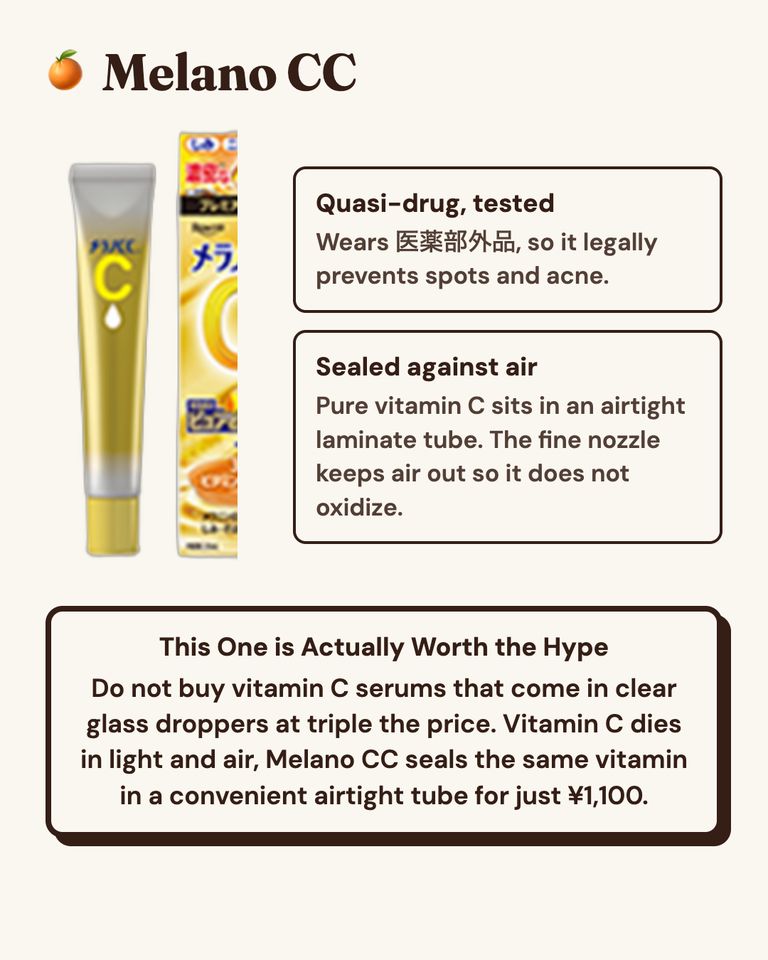
While many viral items disappoint once you inspect their ingredient decks, Melano CC is one popular product that genuinely justifies its reputation.
Many expensive vitamin C serums on the international market arrive in clear glass dropper bottles at three times the cost. Pure vitamin C is notoriously unstable, degrading quickly when exposed to light and ambient air. Melano CC solves this problem at the engineering level by sealing pure vitamin C inside an airtight laminate tube. The specialized fine nozzle dispenses one drop at a time and physically keeps air from entering the container, ensuring the active vitamin remains fresh and potent down to the very last drop.
Furthermore, Melano CC holds official quasi-drug certification (医薬部外品). Because its active formulation is legally tested, it is recognized under Japanese standards to help prevent dark spots and acne blemishes. At a standard drugstore price of approximately 1,100 yen, it outperforms prestige alternatives while remaining remarkably accessible.
Shopping for skincare in Japan is at its best when you ignore sponsored internet lists and let proven labels guide your basket. Looking for quasi-drug verification and clean, alcohol-free formulations will ensure your drugstore haul brings home genuine, long-term results.