
The Japanese Magazine Gift Phenomenon: Tokyo Furoku Guide
Discover furoku, the real beauty samples and designer accessories bundled inside Japanese magazines, and where to find the best issues in Tokyo.

The Art of Furoku: How to Find Designer Gifts Inside Japanese Magazines
TL;DR: Japanese fashion, beauty, and culture magazines regularly bundle physical gifts known as furoku directly with their issues for around 900 to 1,000 yen. These extras range from luxury skincare samples and designer tote bags to traditional craft kits, with special editions offering full-size products. You can browse the widest selections across Tokyo at major bookstores like Books Sanseido in Jimbocho, Daikanyama Tsutaya Books, and Books Kinokuniya in Shinjuku.
When you walk into a Japanese bookstore for the first time, one of the most surprising sights is the magazine section. Stacked along the displays are rows of thick monthly publications, many fitted with substantial cardboard packaging or gift boxes strapped directly to their covers. These are not promotional discount flyers or mail-in coupons. They contain genuine, physical goods glued straight onto the pages, waiting to be taken home along with the reading material.
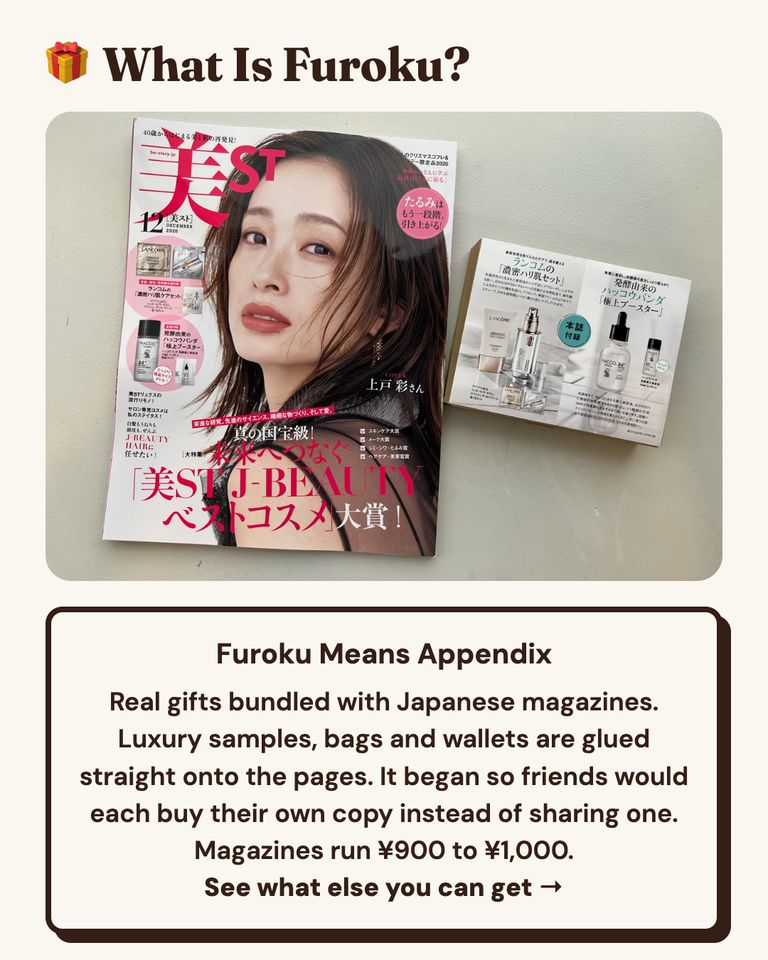
In Japan, this practice is known as furoku, which translates literally to appendix or supplement. While the concept of a magazine freebie exists in other countries, Japanese publishers have elevated it into an art form. For international travelers looking for practical souvenirs, picking up a few of these monthly publications is one of the most rewarding ways to shop.
What Is Furoku?
The tradition of attaching gifts to publications has a clear historical background in Japan. It originally began so friends would each buy their own copy of a magazine instead of sharing one. By including an exclusive, physical item that only the buyer could keep, publishers created an incentive for individual purchases.
Over the years, these supplements evolved from simple paper inserts into luxury samples, daily accessories, bags, and wallets. Despite the quality of the items included, regular issues typically run around 900 to 1,000 yen. For roughly the price of a coffee and a pastry, you receive both a comprehensive fashion or lifestyle publication and a curated product from an established brand.
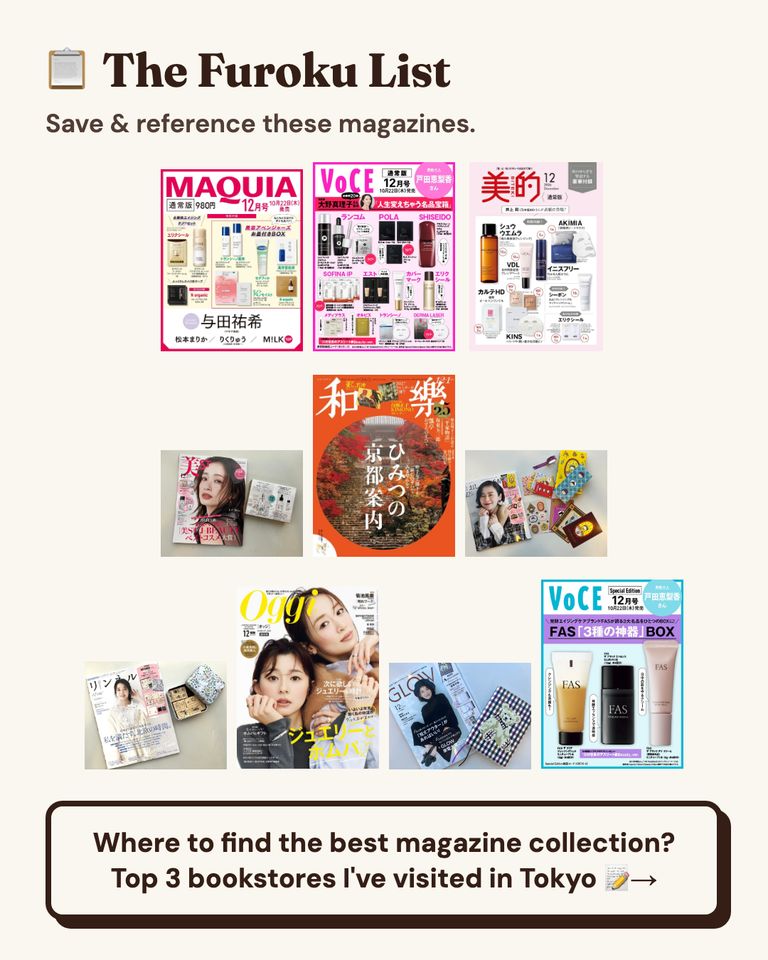
The gifts are sealed inside sturdy cardboard frames attached to the magazine binding, keeping them protected on bookstore shelves. Walking the magazine aisles allows you to inspect the packaging, as the front covers display detailed breakdowns of the items included inside that month.
Skincare and Beauty Issues
Beauty monthlies are among the most popular furoku purchases in Japan, serving as an accessible way to sample premium cosmetics without purchasing expensive retail bottles.
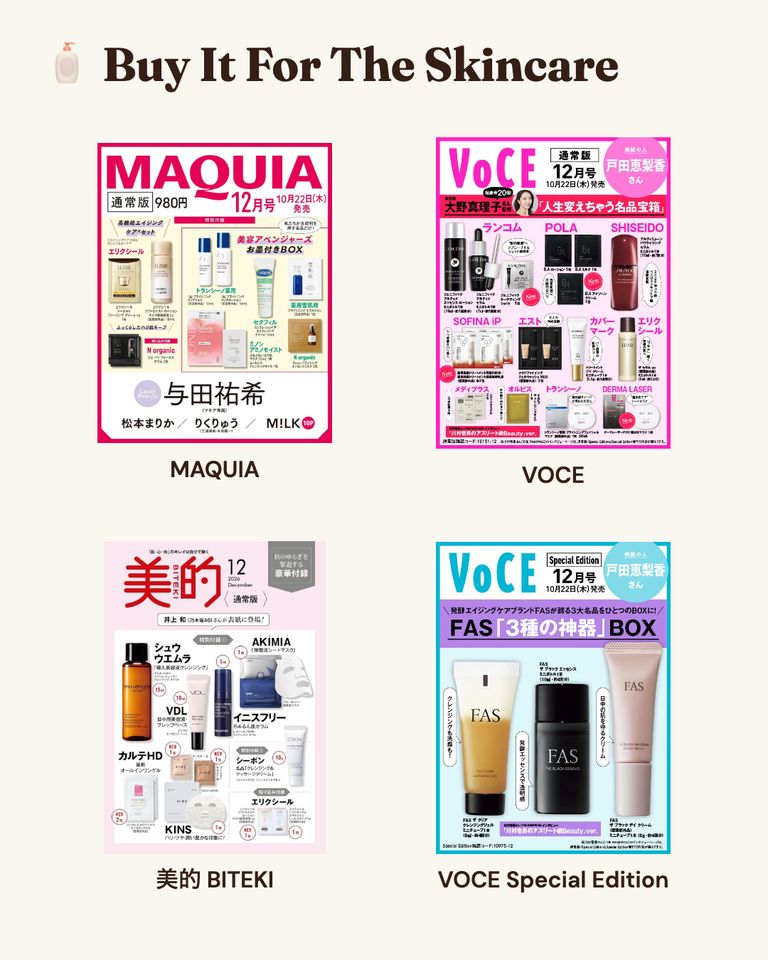
Publications such as MAQUIA, VOCE, and BITEKI lead this category. Each month, their editorial teams partner with high-end cosmetic houses to pack sample sachets and trial bottles into the binding. Cover features routinely include items from luxury brands such as Lancôme, POLA, Clé de Peau, and Shiseido. You will also find issues from magazines like 美ST (BiST) featuring multi-brand cosmetic assortments and booster serums.
These samples are not minor novelties. They often include multi-step skincare routines, allowing you to test premium lotions, serums, and creams over several days. For travelers, these compact bottles and sachets are particularly convenient, slipping easily into a toiletry kit for use during your trip or for your flight home.
Regular Issues Versus Special Editions
When browsing the beauty section, pay close attention to the version you pick up from the shelf. Alongside regular editions, publishers frequently release special editions, labeled as tokubetsu-ban.
While a regular issue at 900 to 1,000 yen generally features travel-sized bottles, sheet masks, or foil sachets, a tokubetsu-ban often holds full-size items. A prime example is the VOCE Special Edition, which has bundled a complete FAS skincare box containing multiple items from the fermentation aging care brand. If you are hoping to secure full-size skincare products rather than trial sachets, looking out for the special edition label on the cover is essential.
Designer Bags and Everyday Accessories
If skincare is not your primary interest, Japan's fashion monthlies focus heavily on functional lifestyle accessories, particularly bags and wallets.
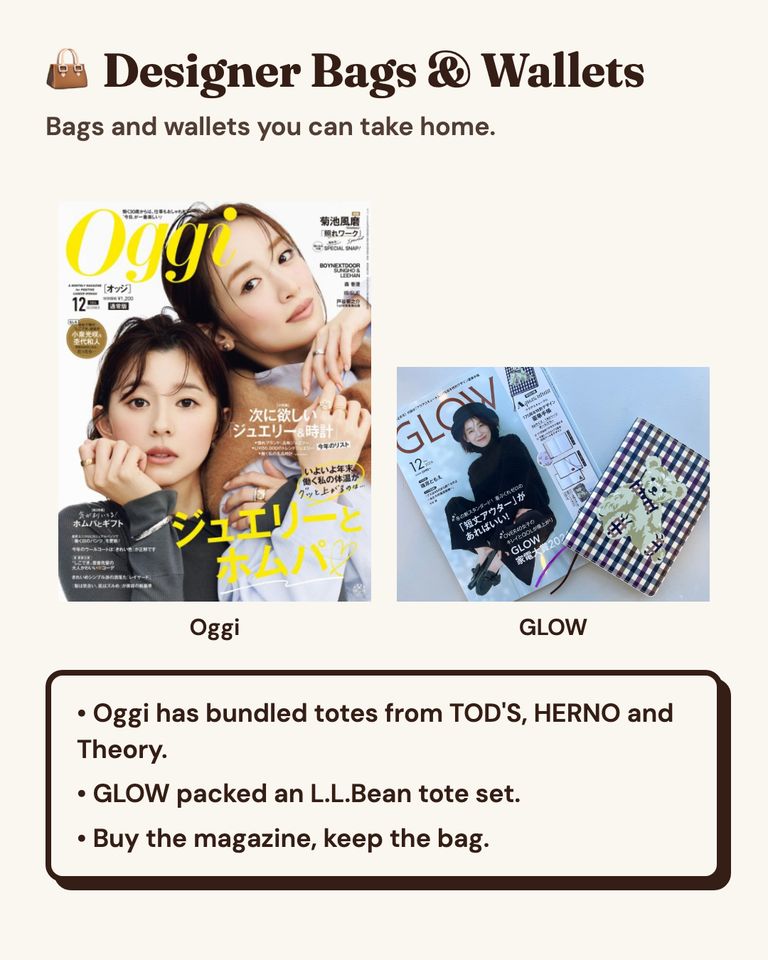
Magazines such as Oggi and GLOW frequently collaborate with international fashion houses and heritage outdoor labels. Rather than low-quality promotional items, these magazines pack durable totes and pouches that you can take home and use daily.
Oggi, for instance, has bundled exclusive tote bags in collaboration with luxury and contemporary brands including TOD'S, HERNO, and Theory. Similarly, lifestyle magazine GLOW has packed complete L.L.Bean tote sets into its packaging. The premise is simple: you buy the magazine and you keep the bag. For travelers, these fold-flat bags provide instant extra luggage capacity for souvenirs acquired throughout your trip.
Culture, Heritage, and Handicrafts
Beyond modern cosmetics and high-fashion accessories, Japanese lifestyle and culture magazines offer furoku centered on traditional crafts and stationery.
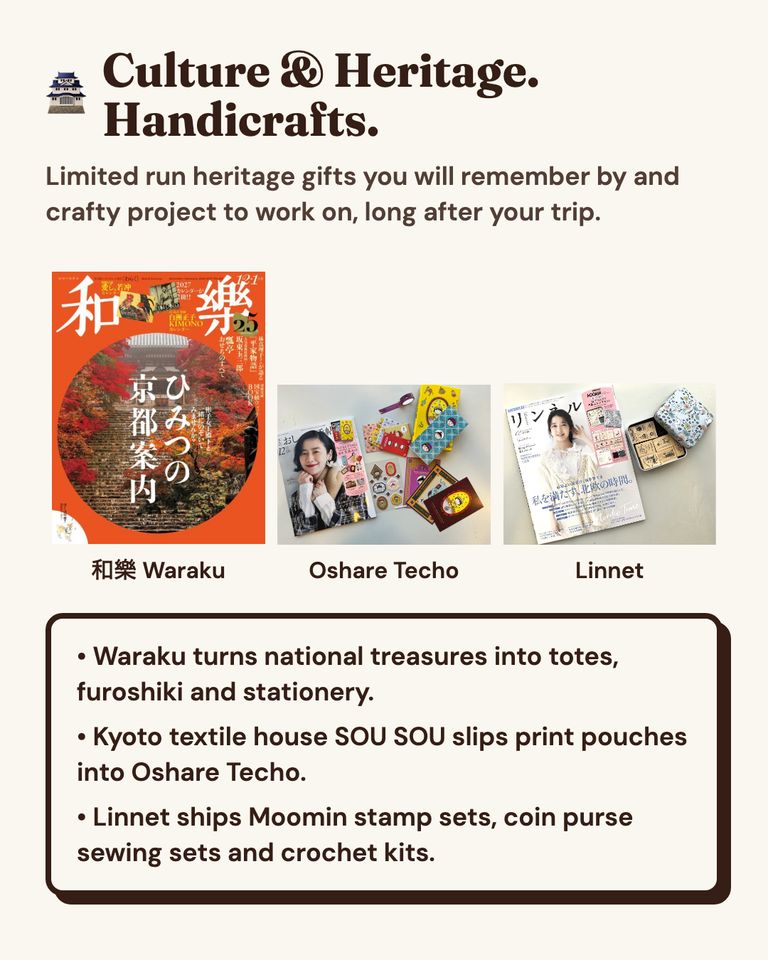
Waraku is a dedicated culture magazine that celebrates traditional Japanese art and aesthetics. Its furoku items frequently turn Japanese national treasures into functional everyday goods. Past issues have included stationery sets, furoshiki wrapping cloths, and tote bags decorated with heritage artwork. These items serve as tasteful keepsakes with deep roots in classical Japanese history.
For textile lovers, Oshare Techo partners with renowned designers, such as the Kyoto textile house SOU SOU, slipping their distinctive graphic print pouches into the magazine. Meanwhile, natural lifestyle publications like Linnet focus on hands-on craft projects. Linnet has shipped collectible Moomin stamp sets, as well as coin purse sewing sets and crochet kits. These provide limited-run heritage gifts and creative projects that you can work on long after your trip has concluded.
Top Bookstores to Buy Furoku in Tokyo
While almost any Japanese convenience store or neighborhood bookshop carries a handful of monthly magazines, visiting a major flagship bookstore gives you access to the full spectrum of regular and special editions. Here are three of the best bookstores in Tokyo for tracking down these gift issues.
Books Sanseido, Jimbocho Main Branch
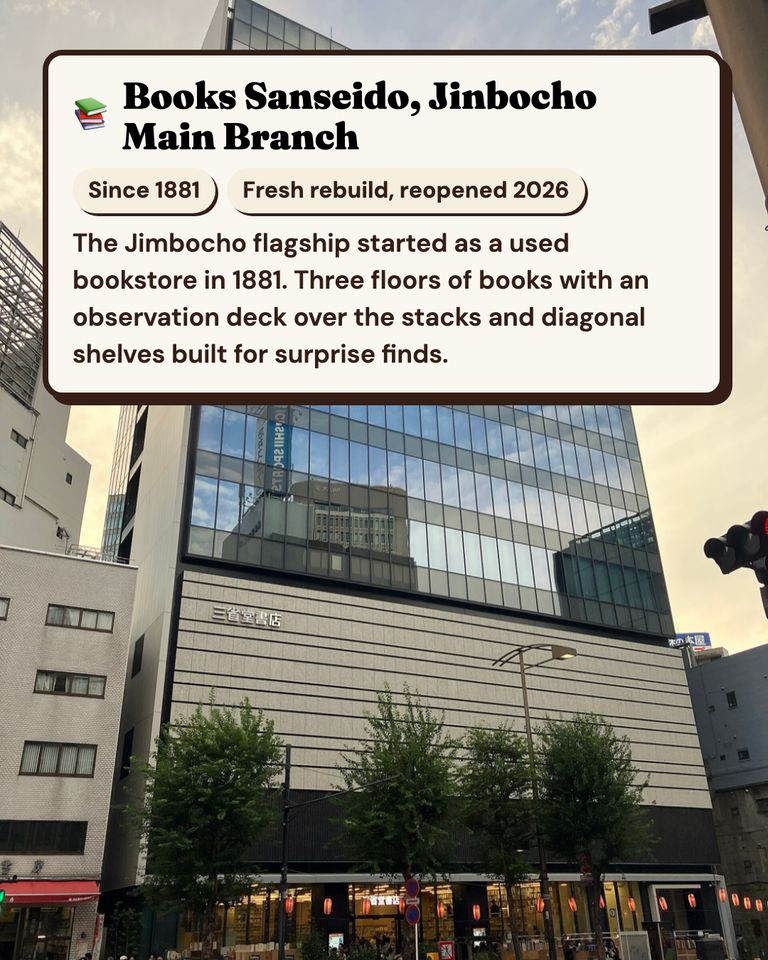
Located in Tokyo's historic book district, Books Sanseido in Jimbocho has a legacy dating back to 1881, when it first opened as a used bookstore. Following a fresh rebuild, the flagship store reopened in 2026 as a modern retail space.
The building features three floors of books, designed with diagonal shelves built specifically to encourage surprise finds as you walk the aisles. Above the stacks, an observation deck provides a unique view over the store. The magazine department here is deeply stocked, making it an excellent stop if you want to explore newly released furoku issues alongside centuries of literary history.
Daikanyama Tsutaya Books
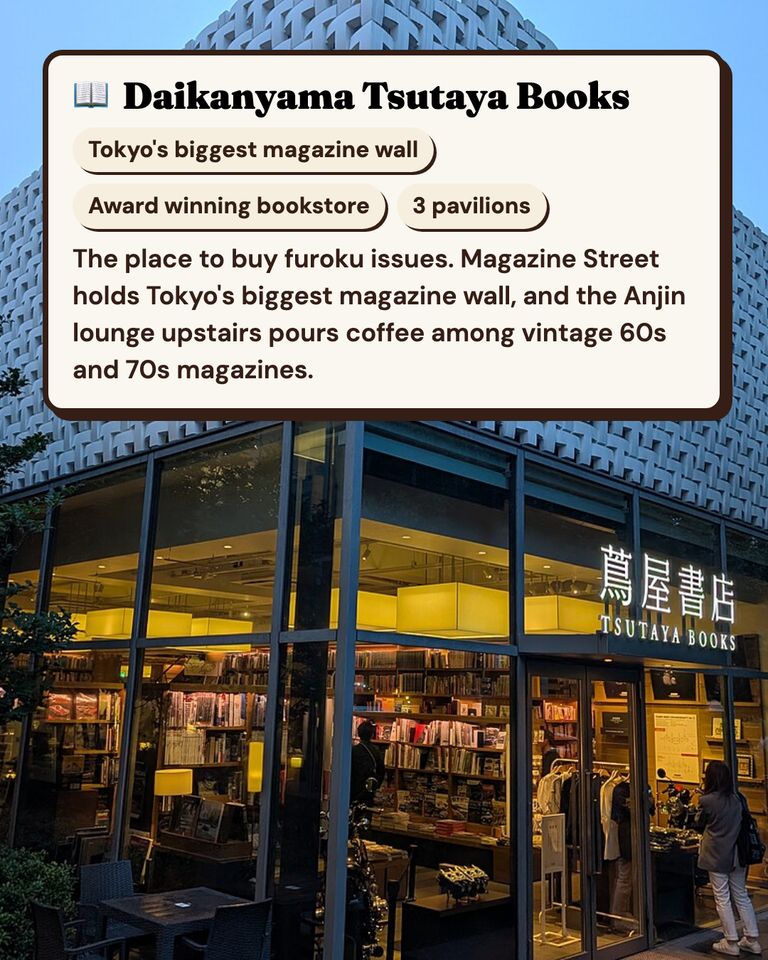
Daikanyama Tsutaya Books is an award-winning bookstore arranged across three interconnected pavilions in a leafy neighborhood. It is widely considered one of the premier locations in Tokyo to buy furoku issues.
The ground floor features Magazine Street, which holds Tokyo's biggest magazine wall. Here, publications are displayed with their cover supplements fully visible, allowing you to compare the included beauty samples and tote bags side by side. Once you have picked your issues, head upstairs to the Anjin lounge, where you can drink coffee surrounded by a curated collection of vintage magazines from the 1960s and 1970s.
Books Kinokuniya, Shinjuku Main Store
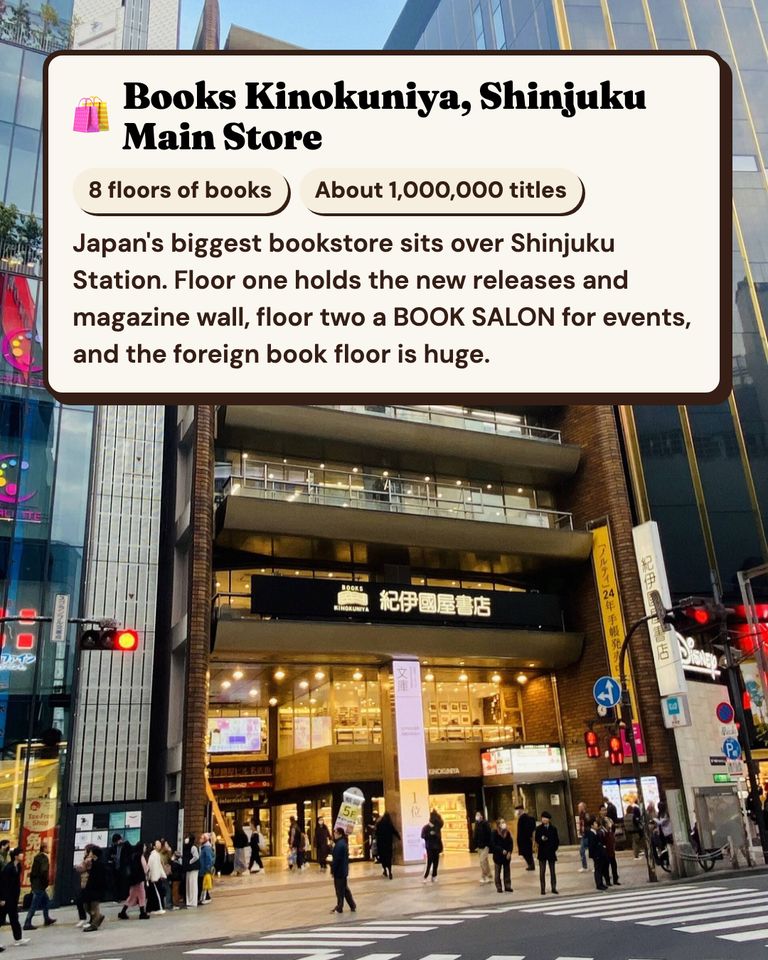
Sitting directly over Shinjuku Station, Books Kinokuniya's Shinjuku Main Store is Japan's biggest bookstore. The massive facility spans eight floors of books and holds roughly 1,000,000 titles.
Floor one is dedicated to new releases and features a comprehensive magazine wall where all the latest monthlies are stocked the moment they arrive. Floor two houses a dedicated Book Salon used for literary events, and the store also maintains a huge foreign book floor if you need English-language guides. Because of its location over one of Tokyo's primary transit hubs, it is an effortless stop to make on your way back to your hotel.
Whether you are looking for luxury skincare from Shiseido and Lancôme, a durable designer tote from Oggi, or traditional Japanese stationery from Waraku, browsing the magazine racks offers an unexpected look into Japanese retail culture. Keep an eye on the bookshops as you travel through Tokyo, check the covers carefully, and enjoy unpacking your souvenirs.