
Hidden Tokyo Traditional Districts to Visit Instead of Asakusa
Explore four historic Tokyo districts beyond Asakusa, featuring quiet alleys, heritage shrines, local food stops, and preserved neighborhood charm.
Four Historic Tokyo Districts to Explore Beyond Asakusa
TL;DR: When Asakusa feels too crowded, Tokyo still holds historic neighborhoods full of preserved character, quiet shrines, and century-old food stalls. This guide covers four traditional walking routes through Kagurazaka, Nihonbashi and Ningyocho, Tsukishima, and Monzennakacho. Each area offers distinct architecture, historic temples, and specialized local dishes.
Asakusa is often the default choice for visitors searching for old-world atmosphere in Tokyo, but the city holds several other traditional quarters that preserve authentic Edo and Showa history. If you are looking to escape heavy crowds and discover quieter historic streets, shifting your itinerary to lesser-known districts offers a more relaxed look into Tokyo culture. By exploring Kagurazaka, Nihonbashi and Ningyocho, Tsukishima, and Monzennakacho, you can experience historic stone paths, traditional bathhouses, regional griddles, and neighborhood temples at your own pace.
Kagurazaka: Hillside Lanes, Geisha Heritage, and Tea Culture
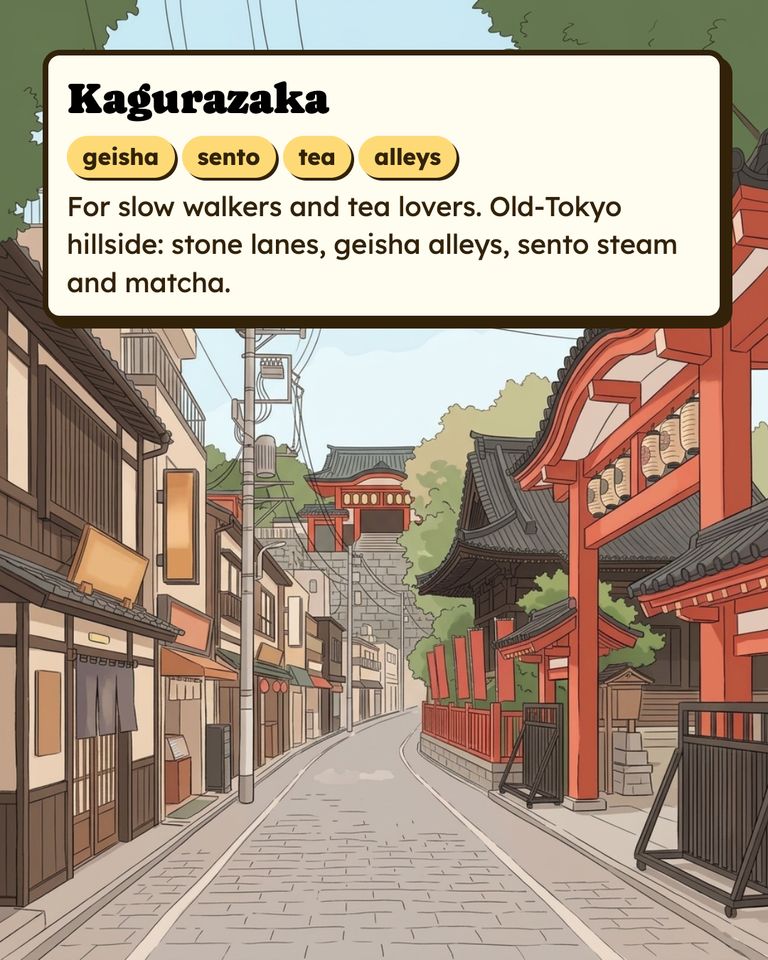
Kagurazaka sits on an old-Tokyo hillside easily reached through Kagurazaka Station or Iidabashi Station. It is an ideal area for slow walkers and tea lovers, defined by quiet stone lanes, geisha alleys, sento steam, and matcha sweets.
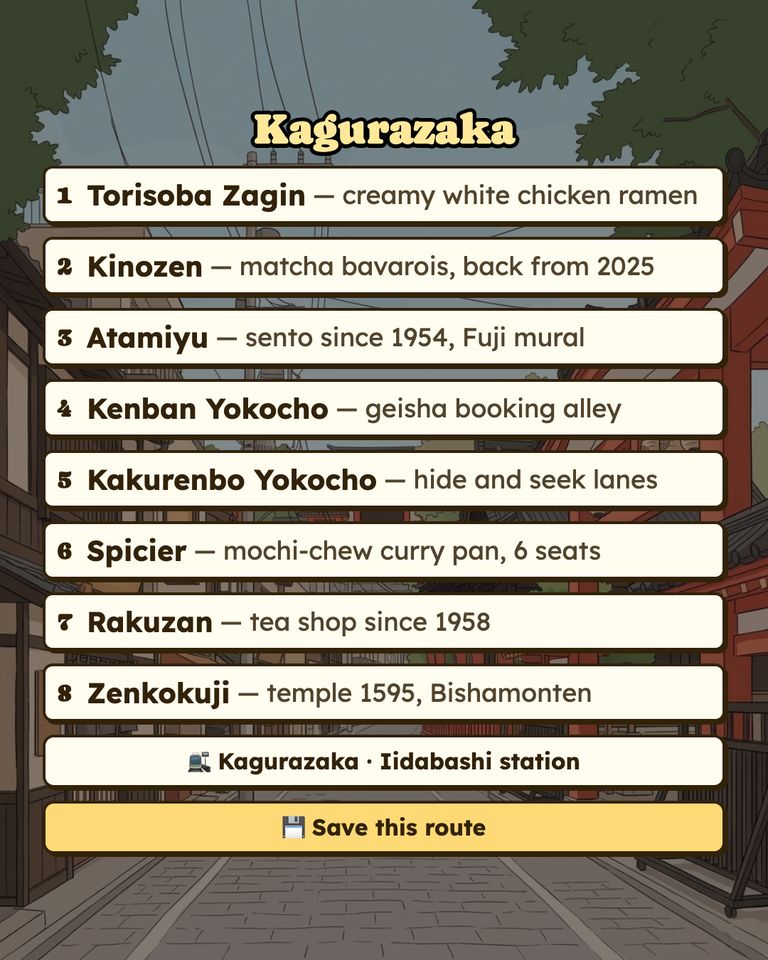
The neighborhood holds deep roots in performing arts and traditional dining, which you can still see through its hidden side streets. Kenban Yokocho serves as the geisha booking alley, maintaining the area's entertainment history. Just around the corner, Kakurenbo Yokocho, known as the hide and seek lanes, offers narrow stone-paved walkways lined with dark wooden fences where you can wander away from modern traffic.
Along the main paths, Zenkokuji is an essential stop. Founded in 1595, this temple is dedicated to Bishamonten, one of the guardian deities, and serves as an anchor for the community. After visiting the temple, you can step into Rakuzan, a tea shop operating since 1958, to browse traditional green teas.
The food in Kagurazaka balances heritage recipes with quiet dining spots. Torisoba Zagin is known for its creamy white chicken ramen, offering a comforting meal during a day of walking. If you prefer bakery snacks, Spicier is a compact six-seat shop specializing in mochi-chew curry pan. For traditional confectionery, Kinozen is famous for its matcha bavarois, back from 2025.
To complete a walking loop through Kagurazaka, stop by Atamiyu. This neighborhood sento, operating since 1954, features a classic Mount Fuji wall mural and provides a look at local bathhouse traditions.
Nihonbashi and Ningyocho: Edo Backstreets and Sacred Power Spots
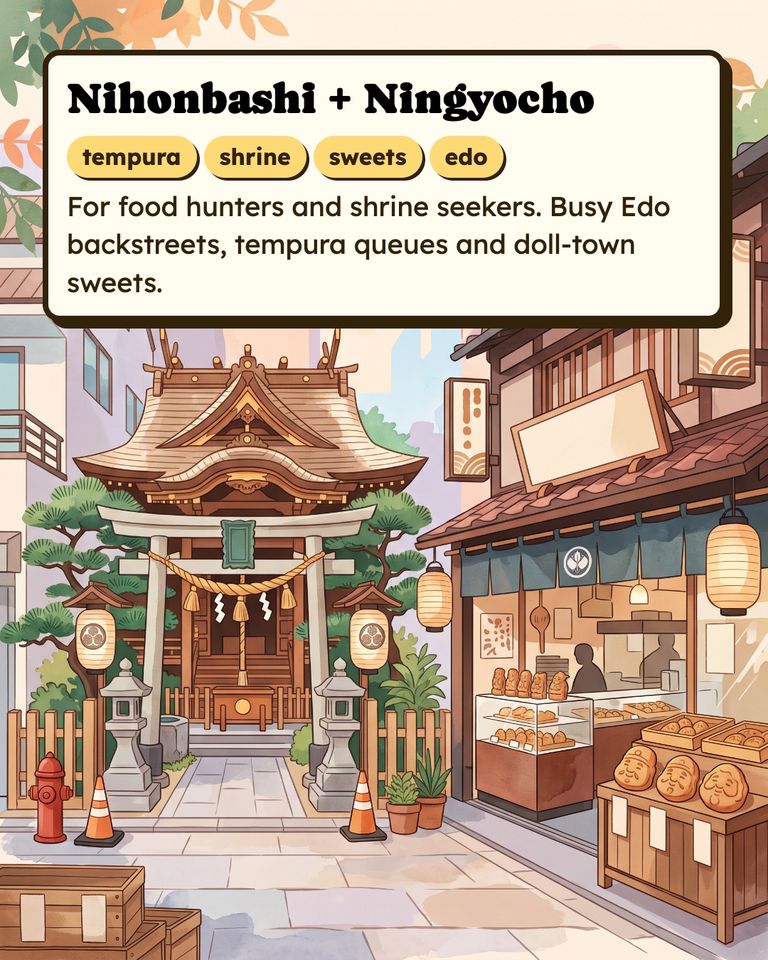
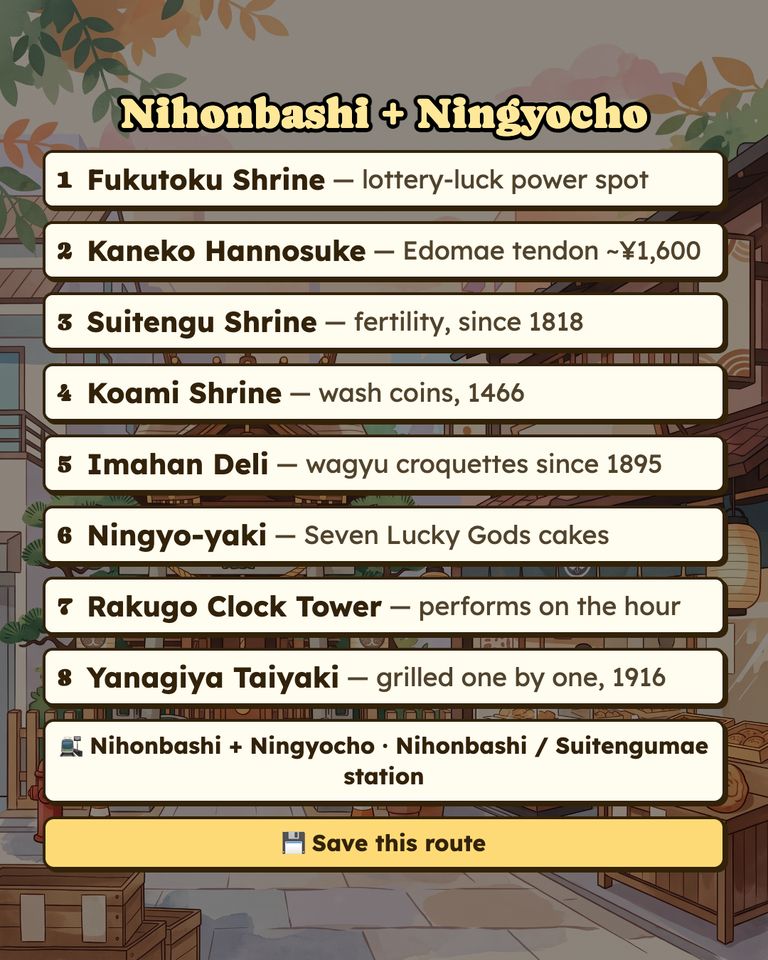
The connected districts of Nihonbashi and Ningyocho form an essential route for food hunters and shrine seekers. Accessible via Nihonbashi Station or Suitengumae Station, this area captures the energy of busy Edo backstreets, famous tempura queues, and classic doll-town sweets.
Shrine visits are a central highlight of walking here. Koami Shrine, dating back to 1466, is known as a place where visitors come to wash coins for good fortune. Nearby, Fukutoku Shrine stands out as a lottery-luck power spot, attracting people hoping to improve their fortunes. For those seeking blessings related to family, Suitengu Shrine has been dedicated to fertility and safe childbirth since 1818.
Ningyocho translates to doll town, and its streets remain lined with specialty food vendors and historic confectionery stalls. Yanagiya Taiyaki, established in 1916, grills its fish-shaped bean cakes one by one over direct flames. You can also pick up traditional ningyo-yaki, which are small sponge cakes shaped like the Seven Lucky Gods.
For savory dishes, Kaneko Hannosuke draws steady crowds for its classic Edomae tendon, priced around 1,600 yen. Another heritage option is Imahan Deli, which has served wagyu croquettes since 1895. Between food stops, watch for the Rakugo Clock Tower along the street, which performs an animated display on the hour, celebrating traditional Japanese comedic storytelling.
Tsukishima: Island Canals, Tsukudani, and Griddled Monja
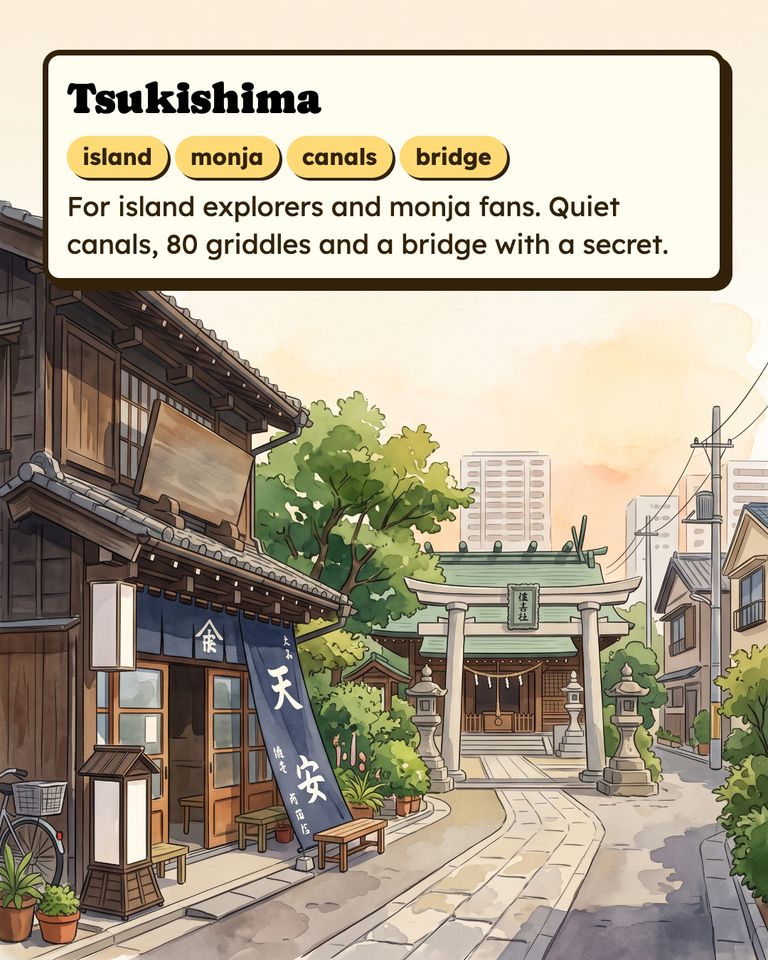
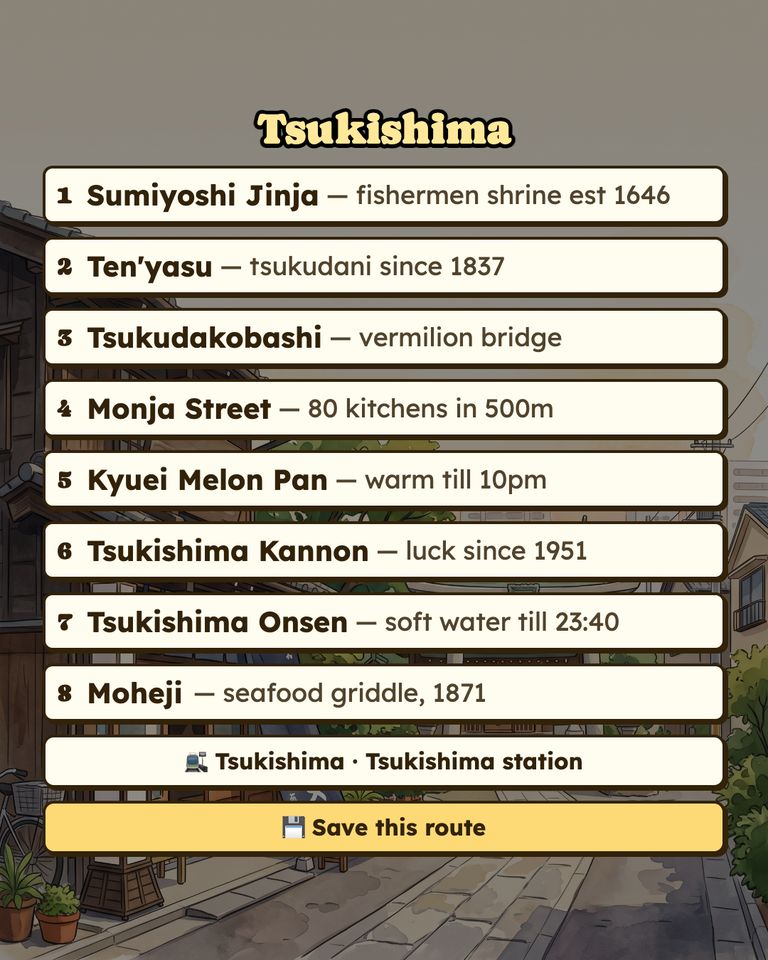
Tsukishima is an island district accessed directly from Tsukishima Station. It appeals to island explorers and food lovers, characterized by quiet residential canals, 80 griddles, and historic waterfront walkways.
The northern section of the district preserves Tsukuda, an older settlement founded by fishermen. Sumiyoshi Jinja, a fishermen shrine established in 1646, reflects the maritime heritage of the island. Right nearby sits Tsukudakobashi, a vermilion bridge with a secret, spanning the calm canal waters. For edible history, Ten'yasu has been making tsukudani, seafood simmered down in soy sauce and mirin, since 1837.
The heart of the neighborhood is Monja Street, which packs 80 kitchens into a 500-meter stretch. Tsukishima is the spiritual home of monjayaki, a savory pan-fried batter dish cooked directly on iron griddles. Among the many establishments, Moheji stands out for its seafood griddle dishes, continuing culinary roots connected to 1871.
Beyond monjayaki, Kyuei Melon Pan serves freshly baked melon pan warm until 10 pm, making it a reliable evening snack. For neighborhood heritage, visit Tsukishima Kannon, a small site offering luck since 1951. If you want to unwind after walking the canals, Tsukishima Onsen features soft water baths that remain open until 23:40.
Monzennakacho: Temple Rituals, Showa Lanes, and Traditional Treats
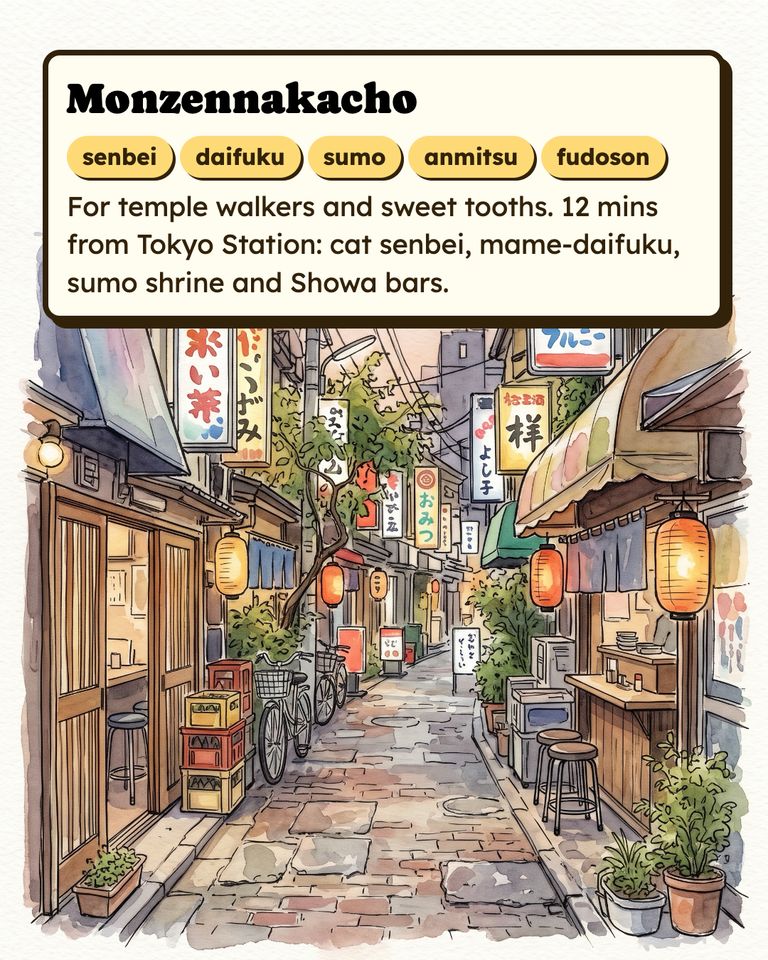
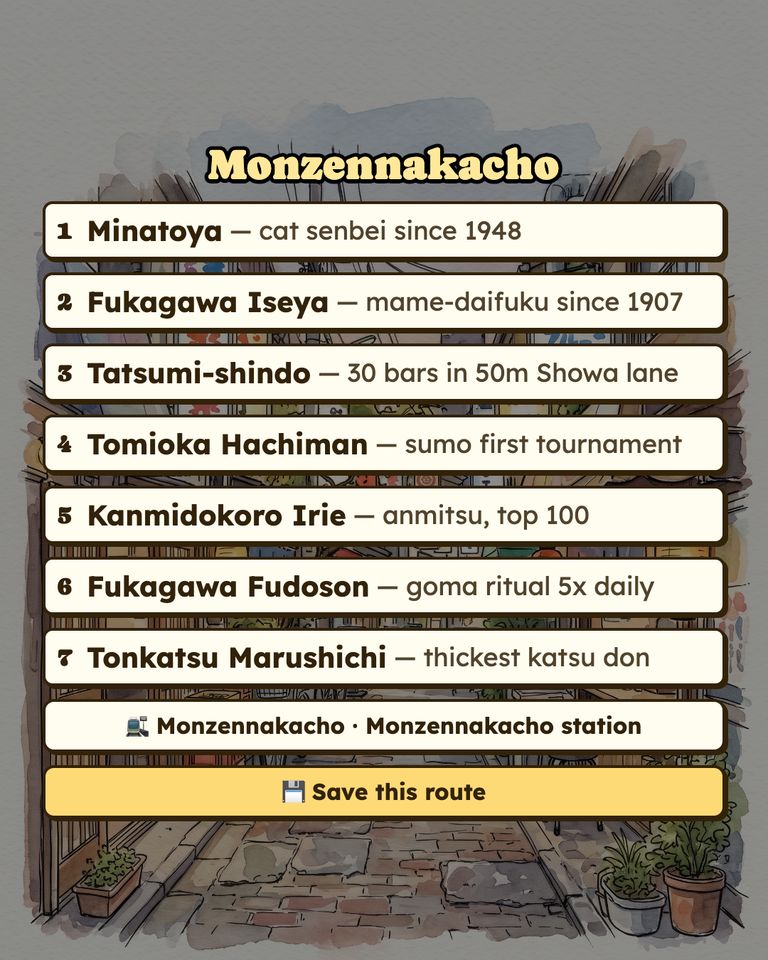
Located just 12 minutes from Tokyo Station, Monzennakacho is an easy trip for temple walkers and sweet tooths. Using Monzennakacho Station as your base, you will encounter cat-themed rice crackers, mame-daifuku, historic sumo ties, and retro Showa-era alleys.
Religious heritage defines the neighborhood streetscape. Fukagawa Fudoson is an active Buddhist temple where visitors can witness the powerful goma fire ritual, which takes place five times daily. Next door sits Tomioka Hachiman, an expansive Shinto shrine renowned as the birthplace of the first sumo tournament.
The surrounding streets are rich with sweet shops and casual savory counters. Fukagawa Iseya has been crafting fresh mame-daifuku, soft mochi stuffed with sweet red bean paste and salted peas, since 1907. If you enjoy rice crackers, Minatoya has produced cat senbei since 1948. For a sit-down sweet break, Kanmidokoro Irie is a celebrated shop recognized in the top 100 rankings for anmitsu, a classic dessert of agar jelly, sweet bean paste, and syrup.
For lunch or dinner, Tonkatsu Marushichi is known for preparing the thickest katsu don, serving deep-fried pork cutlets over rice. As evening approaches, take time to explore Tatsumi-shindo. This atmospheric Showa lane packs 30 small drinking bars into a narrow corridor just 50 meters long, preserving the intimate nightlife style of mid-century Tokyo.
Practical Tips for Walking These Historic Quarters
Because these four districts are located across central and eastern Tokyo, you can easily experience them across several afternoons or combine adjacent areas into single walking days.
Kagurazaka works particularly well in the afternoon, allowing you to browse the tea shops, explore the hidden stone alleys, and finish with a bath at Atamiyu. Nihonbashi and Ningyocho pair naturally together for a morning or midday food crawl, since you can pick up fresh taiyaki, enjoy tendon, and visit the three historic shrines within a compact walking loop.
Tsukishima and Monzennakacho are located relatively close to one another on Tokyo's east side. You can spend the afternoon taking in the goma ritual at Fukagawa Fudoson and browsing traditional sweets in Monzennakacho, then head across to Tsukishima for dinner on Monja Street, followed by late-evening melon pan and a soak at Tsukishima Onsen.
Taking the time to walk these districts provides a direct look into Tokyo's neighborhood culture, away from heavy tour buses, giving you space to appreciate the city's living history.