
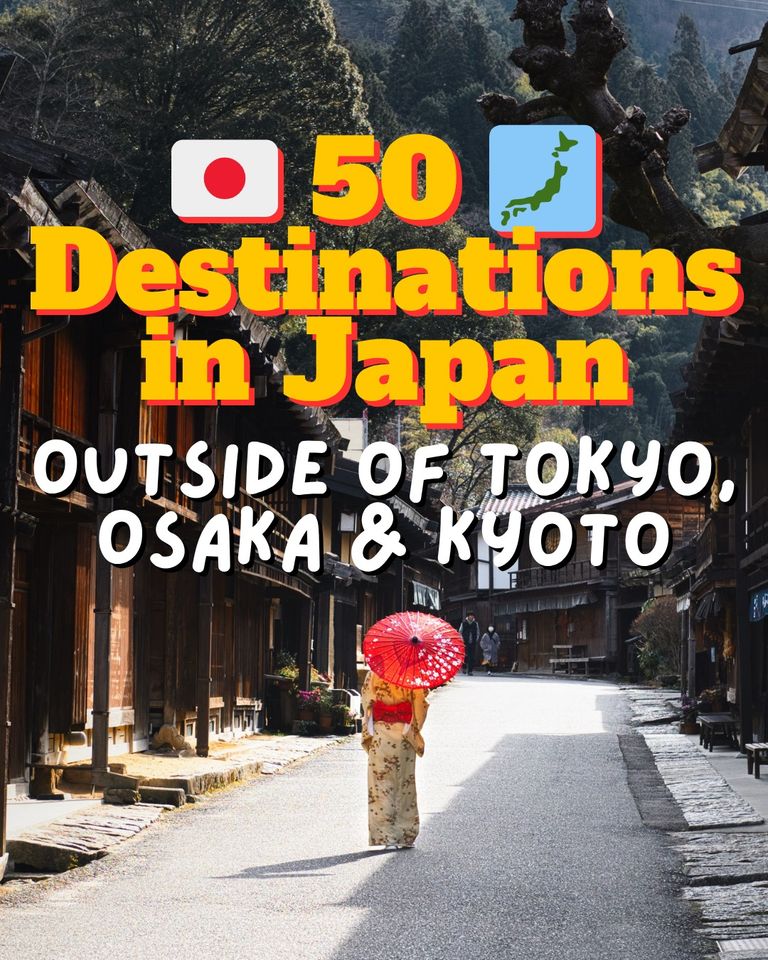
50 Destinations in Japan Outside Tokyo, Kyoto, and Osaka ⛩️
Discover historic post towns, alpine trails, coastal hot springs, and sacred shrines across Japan far beyond the classic Golden Route.
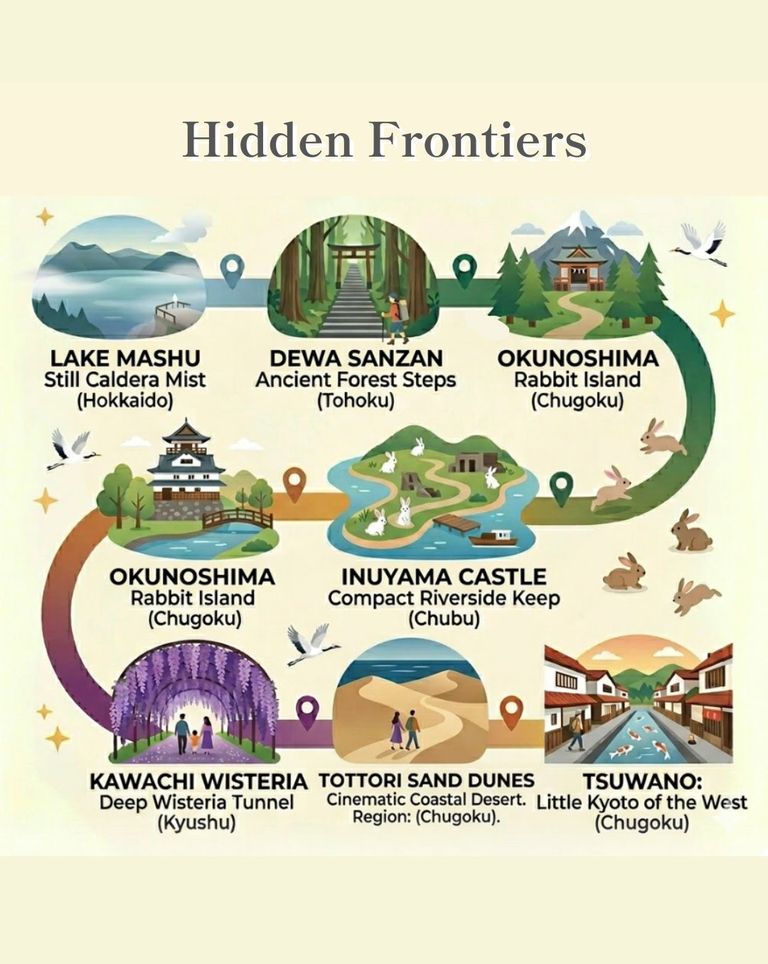
Beyond the Golden Route: Fifty Regional Destinations Across Japan
TL;DR: While Tokyo, Kyoto, and Osaka form the standard first-time itinerary, Japan has a vast network of rewarding destinations spread across every region. From preserved mountain post towns to quiet coastal hot springs and alpine hiking routes, traveling outside the major metropolitan corridor reveals a slower, deeply cultural side of the country. This guide brings together regional hubs, nature reserves, and historic sites to help you design an itinerary that ventures further afield.
When planning a trip to Japan, it is easy to default to the well-trodden Golden Route. Rail connections make moving between Tokyo, Kyoto, and Osaka straightforward, but that convenience also concentrates visitor traffic along a narrow path. Whenever I plan an extended route through Japan, I look for places where historic architecture remains intact within its natural landscape, where local hot spring culture defines daily life, and where regional cuisine reflects centuries of geography rather than global commercial trends.
Exploring beyond the major cities does not mean you have to abandon comfortable transit or historic depth. Japan maintains excellent regional rail, bus lines, and ferry networks that connect historic castles, secluded valleys, and island communities. Whether you are seeking quiet walking routes, seasonal botanical displays, or secluded onsen towns, here is a comprehensive look at regional destinations to consider.
Cultural Hubs and Scenic Regional Centers
A great way to begin venturing outward is by choosing regional hubs that offer rich local history alongside convenient transport links.
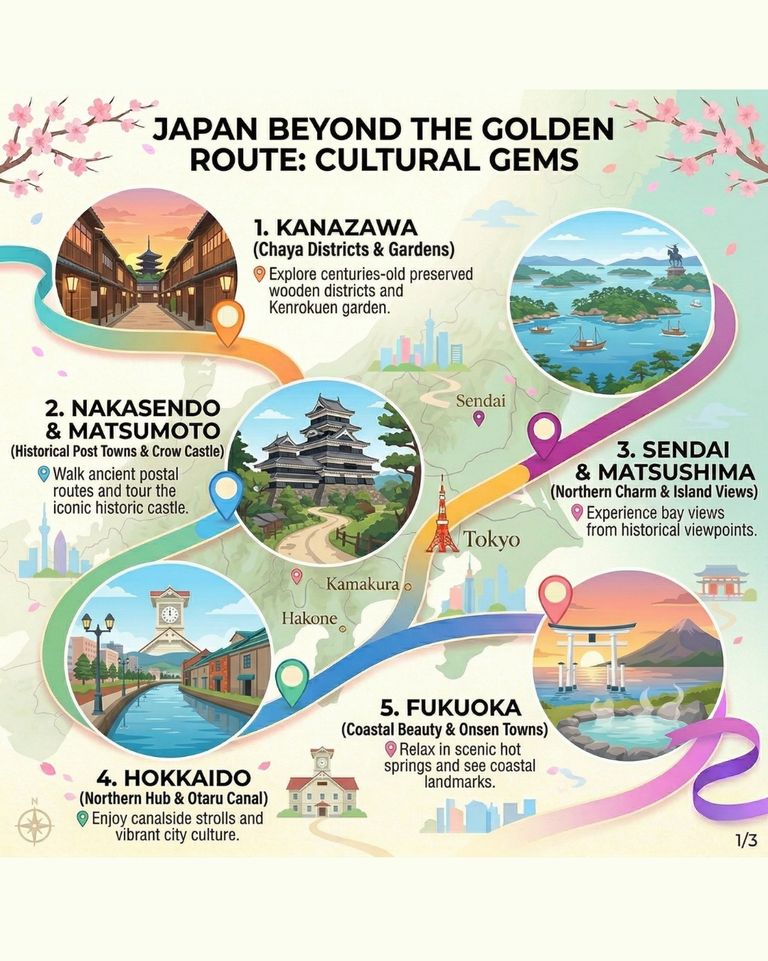
Kanazawa sits near the Sea of Japan and provides an ideal look at classical urban design. Here you can explore centuries-old preserved wooden chaya districts where geisha entertainment traditions developed, as well as Kenrokuen garden, widely recognized for its water features, stone bridges, and seasonal plantings.
In central Japan, Matsumoto serves as a gateway to the historic Nakasendo postal trail. In the center of town stands Matsumoto Castle, known as the Crow Castle for its striking black exterior walls, surviving as one of the country's genuine original wooden keeps. Combining castle exploration with walking segments of the ancient Nakasendo postal route allows you to observe how travelers crossed the mountainous heart of the country during feudal times.
Heading north, Sendai provides access to Matsushima Bay, celebrated for centuries for its coastal scenery. Taking in the bay views from historic viewpoints reveals dozens of pine-clad islands scattered across calm waters.
Further north on the northern island, Hokkaido offers an entirely distinct atmosphere. The port of Otaru features scenic canalside strolls past brick and stone warehouses, alongside vibrant northern city life in the surrounding urban centers.
To the southwest on Kyushu, Fukuoka provides an active coastal metropolis where you can take in coastal landmarks and quickly access scenic hot spring towns nestled in the surrounding valleys and seaside borders.
Day Trips and Escapes Across Kanto and Nearby Prefectures
For travelers using Tokyo as a home base, several surrounding prefectures present opportunities to leave the high-rise landscape behind without boarding a domestic flight.
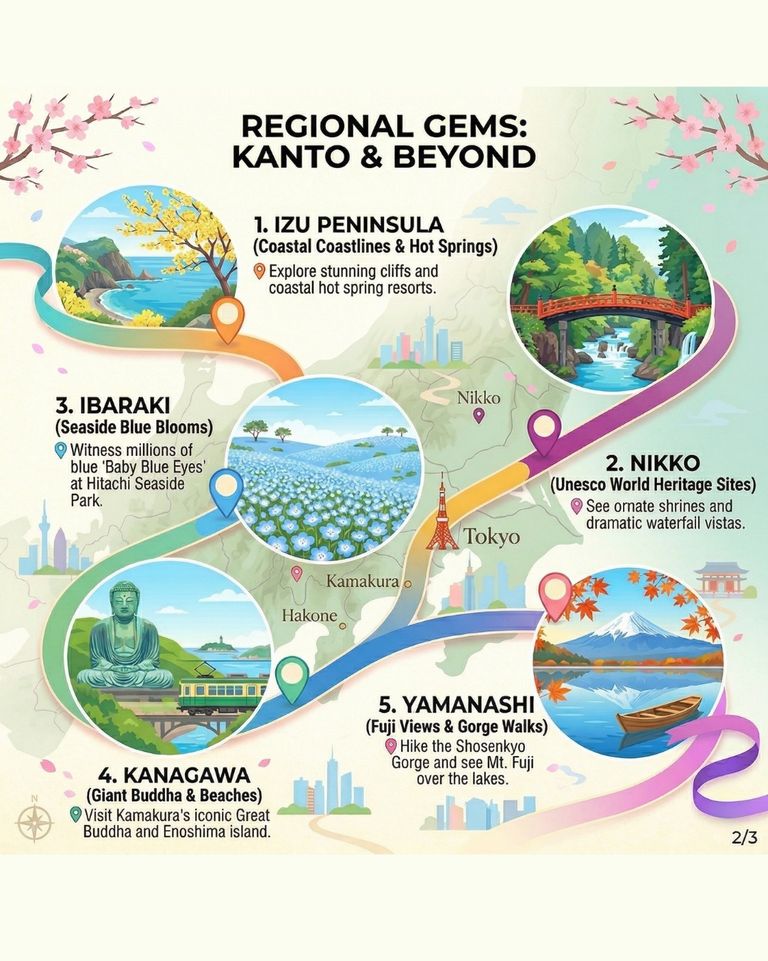
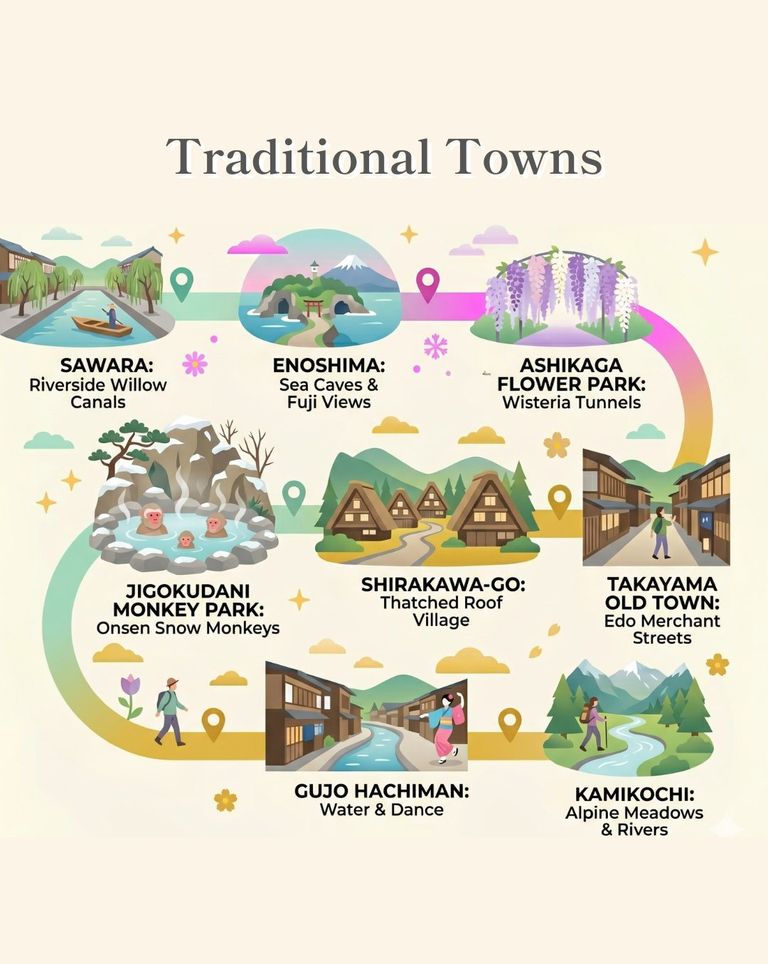
The Izu Peninsula extends south into the Pacific, characterized by dramatic coastal cliffs and established hot spring resorts that overlook the ocean. Nearby in Kanagawa Prefecture, you can visit Kamakura to see the historic Great Buddha, followed by a visit across the bridge to Enoshima island with its coastal views and shrines.
Directly west, Yamanashi Prefecture wraps around the base of Mount Fuji. Hiking the granite cliffs and forested trails of Shosenkyo Gorge provides outdoor recreation, paired with classic lake viewpoints looking back toward Mount Fuji across the water.
To the north, Nikko in Tochigi Prefecture holds an extensive collection of Unesco World Heritage shrines set amid old cedar groves, alongside sweeping waterfall vistas in the mountains above town. In Ibaraki Prefecture, Hitachi Seaside Park draws visitors in spring with its rolling hills blanketed by millions of blue Baby Blue Eyes blooms, creating a seamless line between the flowers and the open sky.
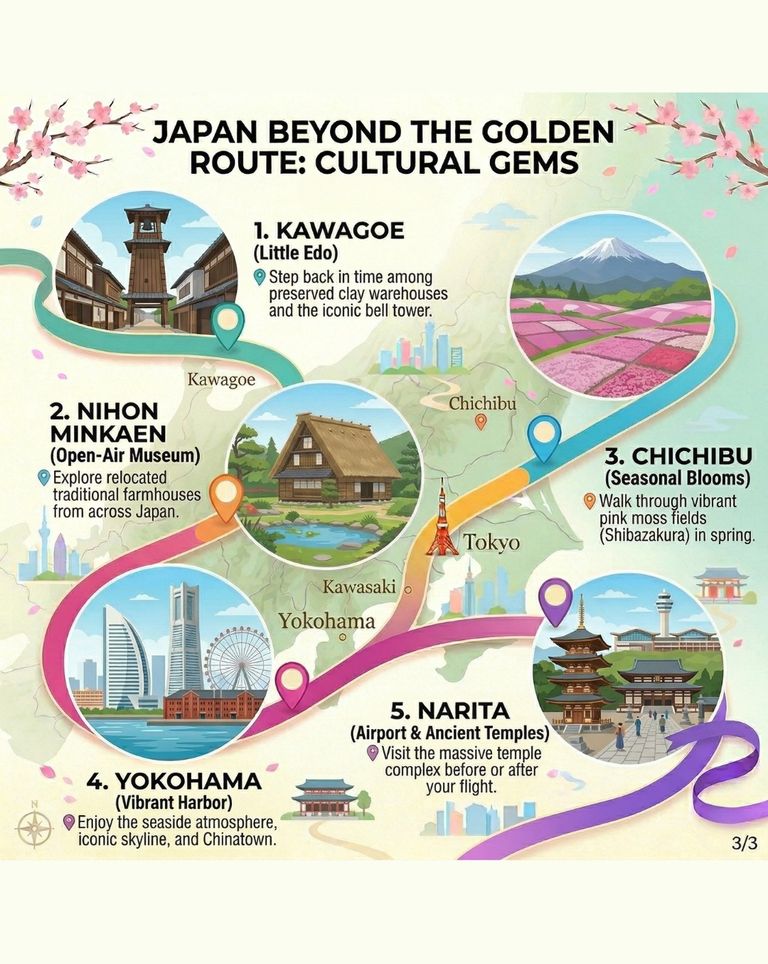
Closer to Tokyo, Kawagoe in Saitama Prefecture is known as Little Edo. The historic center contains well-preserved clay warehouses and an iconic wooden bell tower that still sounds the hours. Also in Saitama, Chichibu features seasonal blooms, particularly in spring when parks transform under wide blankets of pink moss fields, known as shibazakura.
In Kanagawa, the Nihon Minkaen open-air museum in Kawasaki offers a collection of relocated traditional farmhouses brought together from diverse regions across Japan. Meanwhile, Yokohama offers an open harbor atmosphere, an expansive waterfront skyline, and one of the largest historic Chinatowns in the country. Even transit days near Narita Airport can be culturally productive by visiting the large Narita temple complex located just minutes from the runways.
Central Kanto also features Sawara in Chiba Prefecture, where you can take boat rides along riverside willow canals flanked by merchant storehouses, and Ashikaga Flower Park in Tochigi, celebrated for its expansive wisteria tunnels.
Northern Dreams: The Untamed Scenery of Tohoku and Hokkaido
Northern Japan appeals to travelers who prioritize open spaces, snowy winter landscapes, and deep forest hot springs.
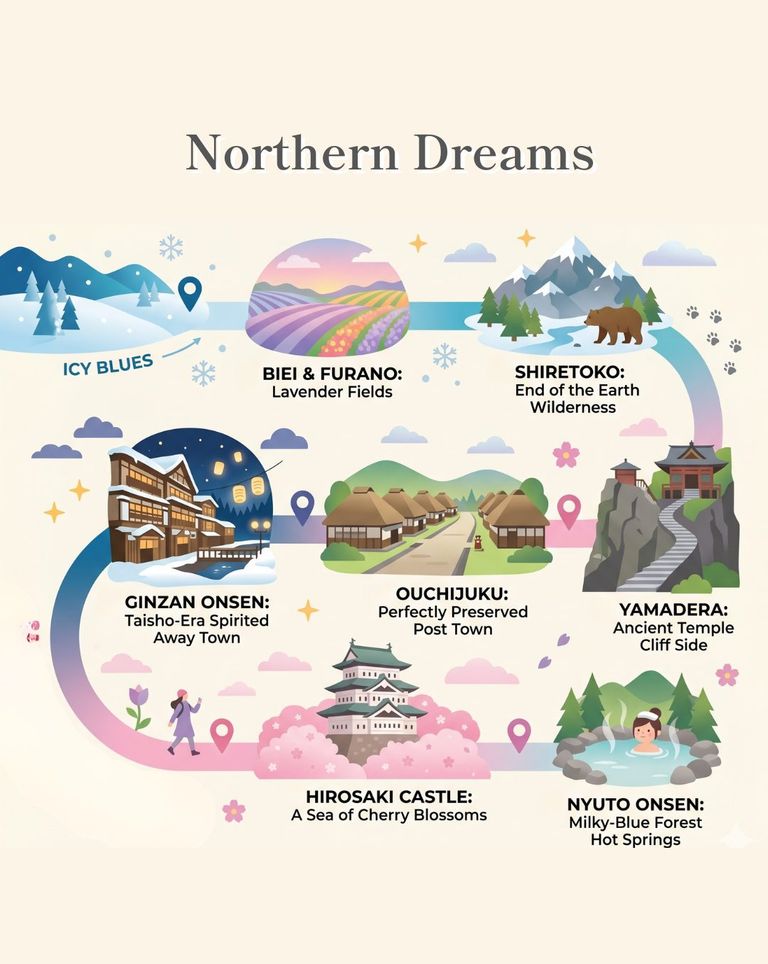
Hokkaido contains remarkable wilderness areas. In Biei and Furano, summer brings vast purple lavender fields across rolling agricultural hills. Further east, Shiretoko National Park preserves an untouched wilderness at what feels like the end of the earth, where dramatic coastal peaks drop directly into the sea and brown bears roam the protected coastline. Nearby Lake Mashu rests inside a volcanic caldera, known for its deep stillness and frequent blankets of morning mist.
In the Tohoku region on northern Honshu, mountain hamlets and historic shrines offer quiet alternatives to urban centers. Ginzan Onsen presents a gas-lit, multi-storied wooden townscape dating to the Taisho era, often noted for evoking the nostalgic atmosphere of animated films like Spirited Away. In Fukushima Prefecture, the post town of Ouchijuku remains preserved with thatched-roof merchant houses lining a broad, unpaved avenue.
Religious history in Tohoku is carved directly into the terrain. Yamadera is an ancient Buddhist temple complex clinging to steep cliffside rocks, reached by climbing shaded forest stairs that yield panoramic views over the valley. At Dewa Sanzan, ancient stone steps guide pilgrims through dense cedar forests across sacred mountain summits.
For seasonal travelers, Hirosaki Castle in Aomori Prefecture is famous for its massive spring displays, where old stone moats fill with a pink sea of cherry blossoms. In Akita Prefecture, Nyuto Onsen offers rustic, communal bathhouses with milky-blue hot spring waters set deep within remote beech forests.
Central Highlands and Alpine Mountain Villages
The mountainous interior of central Japan preserves some of the country's most intact historic districts and dramatic natural terrain.
Shirakawa-go features steep thatched-roof farmhouses, known as gassho-zukuri, built to withstand heavy winter snowfalls in an isolated river basin. Nearby Takayama preserves its Edo-period merchant quarters, where narrow streets are framed by dark wood shopfronts, local sake breweries, and morning markets along the river.
In Gifu Prefecture, Gujo Hachiman is recognized for its pristine waterways running alongside residential streets and its centuries-old summer dance traditions. For hikers, the alpine plateau of Kamikochi in Nagano Prefecture provides flat, scenic valley trails along crystal rivers beneath the soaring peaks of the Northern Alps.
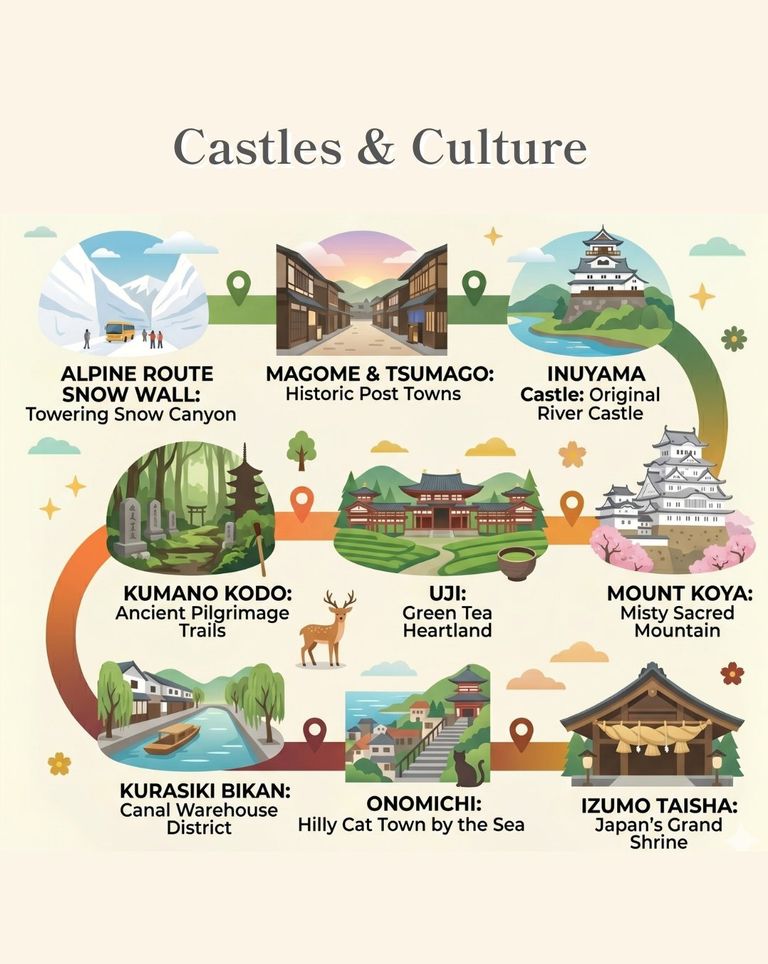
Central Japan also offers unusual seasonal crossings, such as the Tateyama Kurobe Alpine Route, where giant snowplows carve a towering snow canyon each spring, allowing buses and pedestrians to pass between sheer white walls.
The Nakasendo trail connects several quiet post towns in this region, most notably Magome and Tsumago. Walking the preserved stone paths between these two villages offers an immersive step into Edo-period foot travel. In Aichi Prefecture, Inuyama Castle perches on a hill beside the Kiso River as one of Japan's twelve original keeps, offering a compact, historic wooden layout.
Wildlife lovers often make the journey to Jigokudani Monkey Park in Nagano, where troops of Japanese macaques, or snow monkeys, gather during winter to bathe in the natural geothermal waters of the valley.
Coastal Settlements, Inland Seas, and Southern Islands
Moving southwest into the Kansai countryside, the Seto Inland Sea, and Kyushu brings an entirely different climate and maritime culture.
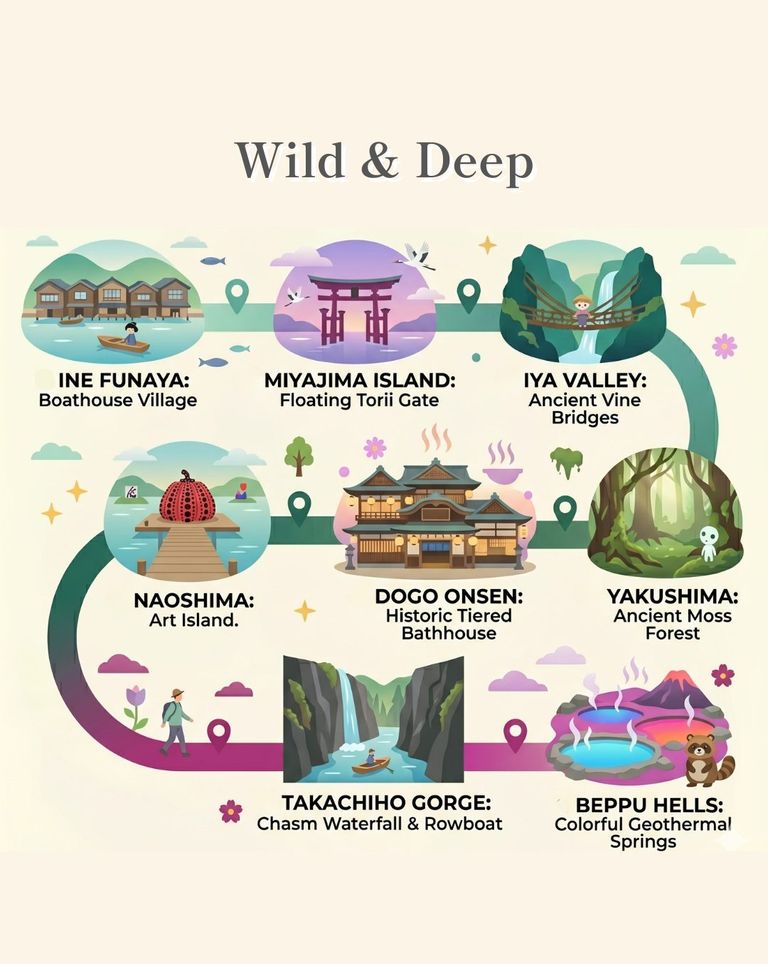
In northern Kyoto Prefecture along the Sea of Japan, the coastal village of Ine features funaya, historic wooden boathouses built directly on the water with boat slips underneath living quarters. Further south along the Inland Sea, Miyajima Island outside Hiroshima is recognized worldwide for its floating red torii gate, which appears to drift upon the tide in front of Itsukushima Shrine.
The Seto Inland Sea also hosts Naoshima, a dedicated art island where contemporary museums and outdoor installations, including prominent seaside pumpkin sculptures, blend into quiet fishing ports. In Hiroshima Prefecture, Onomichi stretches across steep hillside paths overlooking the sea, celebrated for its narrow staircases, historic temple walk, and relaxed resident cat population.
On the island of Shikoku, Dogo Onsen in Matsuyama houses a multi-tiered wooden bathhouse with roots stretching back over a thousand years. Inland, the isolated Iya Valley hides ancient vine bridges woven from living mountain creepers hanging over deep river gorges.
Further south in Kyushu, Takachiho Gorge cuts through basalt columns where you can paddle a rowboat beneath high chasm waterfalls. In Beppu, the famous Hells display colorful geothermal springs bubbling with steam, vibrant blue mineral waters, and red mud pools. In springtime, Kawachi Wisteria Garden in Kitakyushu draws visitors to walk through deep tunnels of wisteria blooms.
For remote nature, Yakushima Island sits off the southern coast of Kyushu. The island is blanketed by an ancient temperate rainforest filled with moss-covered roots, granite rivers, and centuries-old cedar trees.
Sacred Trails and Western Frontiers
The western portions of Honshu hold some of Japan's most revered spiritual landmarks alongside unusual geological landscapes.
In Wakayama Prefecture, the sacred mountain complex of Mount Koya serves as the headquarters of Shingon Buddhism, featuring historic temple lodgings surrounded by misty forest cemeteries. From there, the ancient Kumano Kodo pilgrimage trails trace forested stone paths across the Kii Peninsula, leading to mountain shrines and river sanctuaries.
Just outside Kyoto, the quiet town of Uji serves as the historic heartland of Japanese green tea production, centered around riverside tea houses and historic temples.
Continuing west into the Chugoku region, Kurashiki Bikan preserves a willow-lined canal district bordered by white-walled storehouses and tile-roofed residences from the merchant era. Further west in Shimane Prefecture, Izumo Taisha stands as one of the country's most ancient and grand Shinto shrines, drawing pilgrims to its massive sacred straw ropes and quiet grounds.
In the mountains of Shimane, Tsuwano is often called the Little Kyoto of the West, with stone-lined water canals filled with colorful carp flowing past preserved samurai residences. Along the coast of the Sea of Japan, the Tottori Sand Dunes form a sweeping coastal desert landscape where rolling dunes meet the open water. In the Inland Sea, Okunoshima, historically known for industrial facilities, is now widely visited as Rabbit Island, where hundreds of wild rabbits roam the coastal parklands.
Practical Tips for Itinerary Planning
Building an itinerary around these regional destinations requires a slightly different approach than moving between major cities.
First, consider grouping destinations by geographic corridor rather than attempting to crisscross the map. Pairing Kanazawa, Shirakawa-go, Takayama, and Matsumoto creates a natural mountain traverse across central Honshu that uses efficient regional express trains and highway buses. Similarly, a journey through Tohoku can link Sendai, Matsushima, Yamadera, and Ginzan Onsen along a single northward rail line.
Second, respect local transport schedules. While trains in Tokyo arrive every few minutes, regional bus routes serving alpine valleys like Kamikochi or remote hot springs like Nyuto Onsen may operate only a handful of departures daily. Checking local transit timetables in advance prevents unexpected delays and ensures smooth transfers between rail stations and trailheads.
Stepping off the Golden Route allows you to experience Japan as a mosaic of distinct local cultures, distinct mountain geographies, and preserved historic districts. Taking the time to explore these regional towns and coastal retreats will reward you with quiet mornings, uncrowded paths, and a genuine appreciation for the country's depth.